
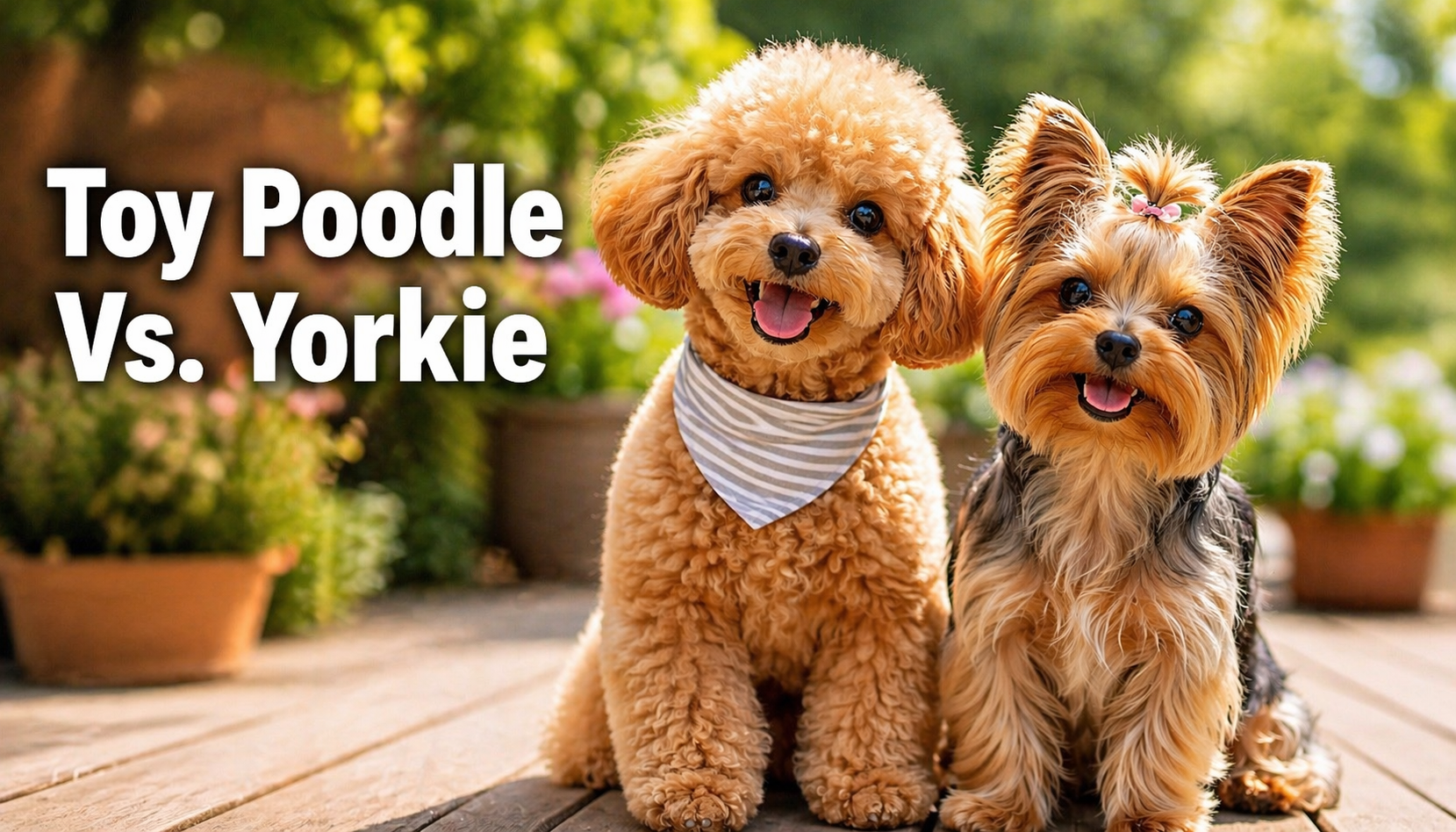
Toy Poodle vs Yorkie: My Honest Thoughts on These Tiny, Energetic Companions
I’ve always been obsessed with small dogs. There’s just something about their small size, big personalities, and the way they take over your home like they own the place that gets me every time. Lately, I’ve spent a lot of time around toy poodle dogs and Yorkshire terrier dogs (aka Yorkies), and honestly, I can’t stop comparing them.
So, I figured I’d write down everything I’ve noticed, from their grooming needs and health conditions to their energy levels and affectionate nature, to help anyone trying to make an informed decision between the two.
Here’s the honest breakdown, coming from someone who once had no idea what to expect as a first-time dog owner.
Size and Looks: Two Small Packages, Big Differences
Let’s start with the basics: size
Both are small breeds, but they don’t look much alike once you put them side by side. The toy poodle has that signature curly coat, super soft, fluffy, and honestly kind of hypnotizing when freshly groomed. Meanwhile, the Yorkshire terrier breed (Yorkie for short) has silky coats that shine like they’ve just come out of a shampoo commercial.
Toy poodles are technically part of the larger poodle breed, which includes the standard poodle and miniature poodle. Each poodle variety has a slightly different build and activity level, but the toy version definitely wins for smaller size and portability.
On average, they weigh about 4–6 pounds and stand around 9–10 inches tall. That’s tiny. And trust me, when you’re trying to carry your pup around in a tote bag (don’t judge me), their smaller size is a plus.
Yorkies are also toy breed dogs. They’re slightly more compact, weighing 4–7 pounds and standing about 7–8 inches tall. So yeah, size differences are minimal. just a bit more solid than toy poodles, which can feel like feathers when you pick them up.
When it comes to coat types, both breeds need regular grooming. Poodles need regular brushing to prevent matting, while Yorkies’ fine, silky hair can tangle just as easily. Honestly, I spend so much time with a brush in my hand that I should probably start charging as a professional groomer.

Grooming and Allergies: The Hypoallergenic Debate
Looks are one thing, but living with their coats day to day is a whole different story.
One thing that makes poodles stand out (and why many people love them on TikTok is their hypoallergenic coat. That’s a huge plus for allergy sufferers. I’ve noticed I sneeze way less around my toy poodle dogs than around most other breeds. Yorkies, surprisingly, are also considered close to a hypoallergenic dog because they have hair rather than fur, but they do shed a little bit more.
No dog is 100% hypoallergenic, but Toy Poodles are considered one of the best options for allergy sufferers due to their low-shedding curly coat.
For toy poodle dogs, their curly coat needs frequent trims, whether it’s a classic poodle cut or something simpler. Some poodle mixes like yorkie poos (Yorkie + Poodle) inherit that same coat type, so keep grooming costs in mind if you’re leaning toward poodle varieties.
Yorkies have fewer tangles if you keep their hair trimmed short. Otherwise, you’ll be brushing like it’s a part-time job. Personally, I found the Yorkie’s silky coat a little bit easier to maintain when kept short, but the toy poodle’s hypoallergenic coat was a big win in homes with allergy concerns.
Bottom line? Grooming is non-negotiable.. so If you don’t have much time for maintenance, neither breed is exactly low effort. Their grooming needs are pretty high and skipping a few days of brushing means tangles galore. Regular visits to a professional groomer and regular vet check-ups are a must if you want to keep their overall health and appearance in top shape.
If you’re not willing to spend much time on regular brushing, a small dog may still be a great choice but maybe look for a breed with lower grooming needs.

Temperament and Personality: Affection and Intelligence
Here’s where both breeds shine. Both are affectionate dogs that absolutely adore their humans. My toy poodle follows me everywhere, bathroom, kitchen, you name it. while my friend’s Yorkie acts like a mini good watchdog, barking at anything that dares to move.
Toy Poodles are quick learners, affectionate dogs, and extremely intelligent. They’re part of the brightest dog breeds for a reason and I can confirm that. My toy poodle picks up new tricks like magic. They pick up on obedience training quickly and are excellent pets for families that value mental stimulation. Give them puzzle toys, regular training sessions, and positive reinforcement, and you’ll have a well-rounded, confident little companion.
Yorkies are also smart, but they have a bit more of that “I’ll do it when I want to” attitude. they are energetic dogs with a big-dog attitude in a smaller size. They’re a little more vocal (read: barky) and can be feisty, especially around strangers or larger dogs. But they’re also loving and fiercely loyal.
If you want a more affectionate dog breed, I honestly think both are good choices, but toy poodles tend to be slightly more emotionally intuitive, while Yorkies are a little more independent.
Because both are energetic dogs, you’ll need to meet their exercise need with minutes of exercise and mental stimulation daily — like puzzle toys or short walks. These breeds have high energy, but since they’re smaller breeds, a little bit of physical activity goes a long way.
Socialization and Family Life
Now, let’s talk about how they fit into different living environments. I’ve seen both breeds do great in apartments, small homes, and even busy households. Thanks to their small size, they’re excellent family members for various living situations from city apartments to suburban homes.
However, early socialization is key. Toy poodle dogs and Yorkshire terrier dogs can both be wary of strangers if not exposed at an early age. Around young children or small children, supervision is always a good idea since these dogs are tiny and can get hurt easily. I’d say they do best with older children or gentle kids who understand how to handle a small dog breed.
They’re also great companions for elderly people or first-time dog owners, as long as they’re ready for the daily brushing and regular care routine. Their affectionate nature and loyalty make them excellent pets for anyone who wants a more affectionate dog breed that actually feels like a family member.
Toy Poodle vs. Yorkie
Health and Longevity
Okay, let’s talk health concerns.
Here’s where things get serious. Every breed comes with health concerns, and both the toy poodle and the Yorkie have a few common health issues worth knowing.
Toy Poodles are generally healthy dogs But like many purebred dogs, they’re prone to some genetic diseases such as progressive retinal atrophy and hip dysplasia, though that’s more common in large dogs or the standard poodle variety. Regular vet check-ups and a balanced diet go a long way in promoting a healthy life.
Yorkshire terrier breed dogs can also live long, healthy lives often reaching 14–16 years but they’re known for a few common health issues like tracheal collapse, dental problems, and luxating patella.
That’s why it’s super important to buy from a reputable breeder who does genetic testing and screens for health conditions before breeding. Poodle owners and potential owners alike should always ask about the parents’ overall health and records. Proper care, a balanced diet, and regular vet check-ups will help both breeds live a healthy life.
The good news is, both are relatively healthy breeds when well-bred and cared for. With a bit of luck and love, you can expect them to live over a decade, sometimes reaching up to 15 years or more.
And for both breeds, separation anxiety can be a thing if left alone for long periods. They’re great companions and prefer being with their people. I always recommend early socialization and creating a predictable routine to help prevent anxiety issues.

Activity and Separation
Even though they’re small dogs, don’t underestimate their physical exercise needs. Both breeds have high energy and crave attention. If you leave them alone for long periods, you might run into separation anxiety — especially with toy poodles, who form deep emotional bonds.
A daily walk, some obedience training, and interactive puzzle toys will help burn off their energy and keep them mentally sharp. They might be tiny, but their brains are always buzzing.
Toy Poodles especially love games that challenge their brain. I use puzzle toys or hide-and-seek games when I don’t have time for a long walk. Yorkies are also active but may be a little more stubborn when it comes to training—though that doesn’t mean they’re less trainable. Just don’t expect them to do things your way all the time!
Mixed Breeds and Alternatives
If you can’t decide, there’s a fun middle ground . The Yorkie Poo, a designer dog that combines the two parent breeds. These adorable hybrids often inherit the hypoallergenic coat of the poodle and the affectionate nature of the Yorkie. They’re usually healthy dogs too, especially when bred responsibly.
Other poodle mixes like the Yorkie Chon are also popular choices in the United States, especially for people looking for great companions that fit into smaller breeds categories.
Toy poodle vs Yorkie: Which breed is easier for first-time dog owners?
If you’re a first-time dog owner, this is where the differences really start to matter. Toy Poodles tend to be more beginner-friendly because they’re quick learners, highly responsive to positive reinforcement, and genuinely eager to please. They usually pick up obedience training faster and adapt well to routines, which makes the whole experience feel less overwhelming.
Yorkies can absolutely be amazing first dogs too, but their strong terrier personality means they can be a little more stubborn and opinionated. If you’re patient and consistent, they’ll thrive, but if you’re looking for a smoother, less stressful start to dog ownership, a Toy Poodle often feels like the easier choice.
Final Thoughts
So, which is better: the toy poodle or the Yorkshire terrier breed? Honestly, it depends on your personal preferences. If you want one of the brightest dog breeds that’s eager to please and trainable, the poodle might be your match. But if you want a confident, sassy little dog with that fearless spirit, go for the Yorkie.
Whichever breed you choose, make sure you work with a reputable breeder, take the time to research potential health conditions, and be ready for regular grooming, training sessions, and lots of daily attention. Both breeds are affectionate dogs, excellent pets, and a great choice for various living situations. With proper care, patience, and love, they’ll reward you with loyalty, endless cuddles, and so many laugh-out-loud moments, and honestly, what more could you ask for in a dog? 🐾
This blog talked about what are Toy Poodle vs. Yorkie. You might also enjoy:
Comments
One response
Hi, this is a comment.
To get started with moderating, editing, and deleting comments, please visit the Comments screen in the dashboard.
Commenter avatars come from Gravatar.