
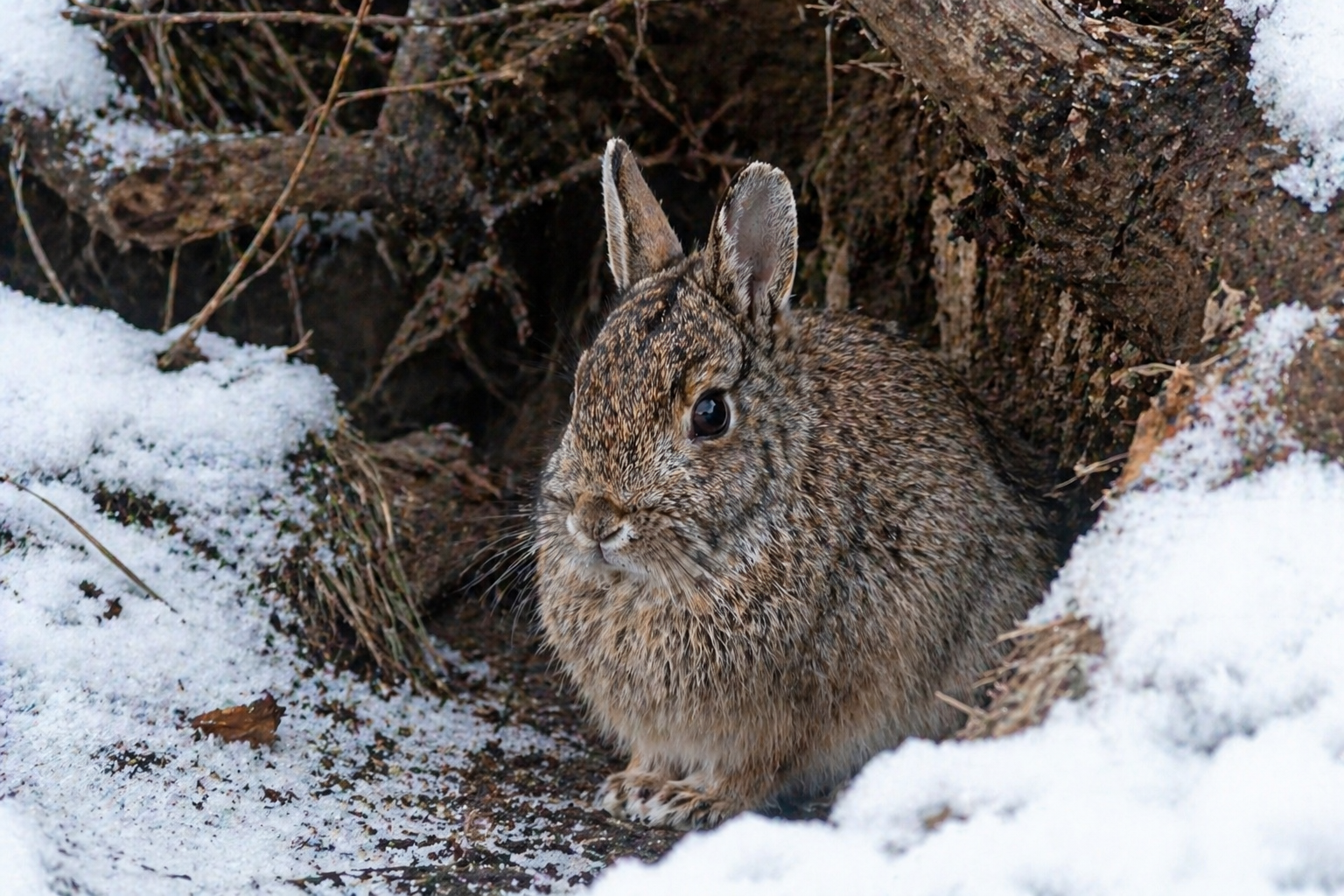
Every winter, the same question pops up: do rabbits hibernate? It makes sense to wonder. Plenty of small animals vanish during the winter season, and rabbits seem to go quieter too. But the truth is more interesting than a simple yes or no.
Rabbits do not hibernate, not even close. What they actually do to survive winter is smarter, tougher, and honestly a little fascinating.
Let me break it down properly.
Why People Assume Rabbits Hibernate
It is an easy assumption to make. A lot of small animals disappear during cold weather. Hedgehogs, dormice, ground squirrels — they all go into some form of deep sleep or torpor during the cold months. So when you stop seeing rabbits around as much in winter, the logical conclusion is that they must be doing something similar.
They are not.
Unlike true hibernators, rabbits never enter a deep sleep state. Their body temperature stays relatively stable. Their heart rate does not drop dramatically. , and instead of sleeping through the cold months, they adapt in their own way to deal with cold temperatures and harsh weather.
How Rabbits Actually Survive Winter
This is where it gets genuinely interesting.
Rabbits — whether we are talking about domestic rabbits, eastern cottontail rabbits, or pet rabbits— rely on a combination of physical changes and behavioral shifts to get through the cold months. No deep sleep required.
The Winter Coat
The most visible change is the coat. As temperatures drop, rabbits grow a much thicker, denser layer of fur than they carry in summer. The thick fur acts as natural insulation, trapping body heat and protecting them from cold nights and freezing temperatures. Compared to their lighter summer coat, this winter coat is much denser and better suited for extreme, intensive cold.
It is one of their most effective survival tools — and it kicks in automatically, no human intervention needed.
Finding Shelter
Wild rabbits like European wild rabbits or eastern cottontail rabbits, don’t have the luxury of a warm house. So They have to be strategic about where they rest.
Dense vegetation, thick bushes, brush piles, and areas near evergreen trees all provide natural wind protection. Some wild rabbits use underground tunnels or dig shallow depressions lined with dry grass to create a sheltered resting spot. Eastern cottontails in particular are skilled at finding and reusing protected areas that block wind and retain warmth.
These are not random choices. They are instincts that have kept rabbits alive through harsh winters for thousands of years.
Diet Shifts
During warmer months, rabbits have access to fresh grass, leafy greens, and a wide variety of food sources. Winter changes that completely.
When fresh food disappears, wild rabbits shift to whatever is available — tree bark, woody plants, and young branches become their primary food source. It is not exactly a gourmet meal, but it keeps them going until spring arrives and food becomes plentiful again.

Do Pet Rabbits Feel the Seasons Too?
Yes — more than most people realize.
indoor rabbits are not dealing with long distances to find food or trying to survive harsh weather. But they still feel seasonal changes.
Shifts in natural light and temperature — even subtle ones inside a warm home — can affect their energy levels and behavior. A rabbit that seems quieter, less playful, or more interested in resting during winter is not sick or hibernating. They are simply responding to the season the way their instincts tell them to.
It is easy to mistake this for something being wrong. Usually, nothing is. But it does mean winter is a good time to pay closer attention.
Winter Care for Outdoor Rabbits
If your rabbit lives outside, winter requires real preparation. This is not a set-and-forget situation.
Shelter comes first. A rabbit’s hutch needs to be properly weatherproofed before temperatures drop.
Use a waterproof cover to block wind and rain. Check for gaps or drafts that let cold air in. The goal is a space that stays dry, protected, and consistently insulated.
Bedding matters more than people think. Good-quality hay or timothy hay does double duty as both food and insulation. It traps body heat and keeps rabbits warm from the ground up.
The catch is that wet bedding loses all of its insulating ability and can actually make your rabbit colder. Check it regularly and replace it the moment it gets damp.
Water freezes. Plan for it. This is one of the most overlooked aspects of winter rabbit care. Water bottles and bowls can freeze faster than you expect on a cold night.
Check water supplies multiple times a day during cold snaps, use insulated bottle covers where possible, and never assume the water is fine just because it was fine this morning.
Feed a little more. Rabbits burn extra energy in cold temperatures just to maintain their body heat. A slight increase in their food allowance during winter helps them maintain the energy reserves they need.
A rabbit’s diet during the cold months is focused on good-quality hay like timothy hay, their regular pellets, and safe greens when available. This helps them maintain a healthy layer of fat, which also contributes to insulation.
Heat disc pads can also be helpful when used correctly — they give rabbits a warmer place to rest on without overheating them.
The key is balance. You are not trying to replicate a warm indoor environment outside. You are just taking the edge off the extreme cold.

Winter Care for Indoor Rabbits
Indoor rabbits have it easier, but they still need special attention.
Cold floors, drafts near windows and doors, and reduced natural light all affect indoor rabbits during winter. Make sure their living space is away from drafts and cold surfaces. A cozy space, a proper exercise area, and access to a quality indoor rabbit hutch gives them somewhere to retreat when they want warmth and security.
Keep their routine consistent. Regular feeding times, daily interaction, and access to space for movement all matter. A rabbit that is less active in winter still needs mental stimulation and exercise — they just might need a little more encouragement to get moving.
One of the most important things I’ve learned when caring for domestic rabbits during winter weather is that maintaining a stable body temperature is key.
Rabbits are actually pretty sensitive to low temperatures, especially baby rabbits and even some adult bunnies that aren’t in the best condition. Their rabbit’s skin is delicate, and without proper care, cold climates can be dangerous.
Baby Rabbits in Winter: Extra Vulnerability
This part does not get talked about enough.
Baby rabbits are significantly more vulnerable in cold temperatures than adult bunnies. They do not yet have a fully developed thick fur, and their ability to regulate body temperature is much weaker.
In the wild, young rabbits huddle together in sheltered nests to share body heat. In captivity, they need extra insulation, dry bedding, and consistent monitoring.
If you have young rabbits during the colder months — whether wild ones you are caring for or domestic babies — treat their warmth as a daily priority, not an afterthought.

Signs Your Rabbit Is Struggling in the Cold
Knowing what to watch for makes a real difference. Look out for:
- Lethargy beyond normal winter quietness — a rabbit that barely moves or responds
- Loss of appetite — not eating is always a warning sign
- Hunched posture — often a sign of discomfort or illness
- Wet or soiled bedding — leads to rapid heat loss and skin irritation
- Frozen water supply — means they may not have been drinking
Any of these warrant a closer look. When in doubt, contact your vet. Rabbits hide discomfort well, which means by the time something is obvious, it has often been building for a while.
The Bottom Line on Rabbits and Hibernation
Rabbits do not enter a state of hibernation. They never have.
What they do instead is quietly impressive — growing thicker coats, finding smarter shelter, adjusting their diet, and staying active through conditions that would send most small animals underground. They do not escape winter. They face it.
For wild rabbits, that means relying on instincts refined over thousands of years. For pet rabbits, it means relying on you.
The basics are straightforward: dry shelter, unfrozen clean water, enough food, and regular check-ins. Get those right and your rabbit will come through winter healthy, warm, and ready for spring.
For outdoor rabbits, adding things like extra insulation, brush piles nearby, or even placing the rabbit’s hutch in a more sheltered location can make a big difference. For indoor rabbits, maintaining a stable environment with good airflow but no drafts is key.
They are tougher than they look. You just have to meet them halfway.
This blog talked about do rabbits hibernate or not, you might also enjoy: