
Some dogs just stop you cold. That happened to me at a dog park a while back. A dog trotted past with this deep rusty orange coat and crisp white markings and I genuinely had no idea what I was looking at. Turns out it was a Nova Scotia Duck Tolling Retriever — and that one moment sent me down a weeks-long obsession with orange and white dog breeds that I am still not fully over.
These are not just orange dog breeds. Not just white dogs. These are the breeds where both colors come together — and the result is something genuinely unforgettable.
Here is everything you need to know.
Why Coat Color Even Matters
Before getting into specific breeds, I want to say something that took me a while to fully absorb. Coat color doesn’t define a dog’s personality, but coat type absolutely affects how you care for them. A fluffy coat needs regular grooming. A double-layered coat sheds like crazy twice a year.
Understanding what you’re signing up for in terms of maintenance is part of giving your dog the best care from the start. So as we go through these breeds, I’ll try to flag the grooming realities alongside the good looks, because a stunning coat that you’re not prepared to maintain is a recipe for a stressed dog and a frustrated owner.
Orange and white dog breeds
Nova Scotia Duck Tolling Retriever

This was the dog that started everything for me. The Nova Scotia Duck Tolling Retriever, often just called a Toller, has this gorgeous deep orange coat with white markings on the chest, paws, and sometimes the face. It’s one of those distinctive looks that people always ask about at the dog park.
But beyond the looks, these are seriously athletic dogs. They were bred as hunting dogs, specifically to lure and retrieve waterfowl, and that background means they have an energy level that doesn’t quit. They need plenty of exercise and real mental stimulation to stay happy.
The American Kennel Club recognizes them, and they’ve been growing steadily in popularity in the United States, and for good reason. If you’re an active person looking for a medium-sized dog with serious intelligence and a coat that looks like autumn, the Toller is a perfect match.
- Health notes: Hip dysplasia and progressive retinal atrophy are the main concerns. Health testing from breeders is essential.
- Lifespan: 12 to 14 years.
- Cost: $1,500 — $3,500.
- Best for: Active owners, outdoor enthusiasts, experienced dog handlers.
Shiba Inu

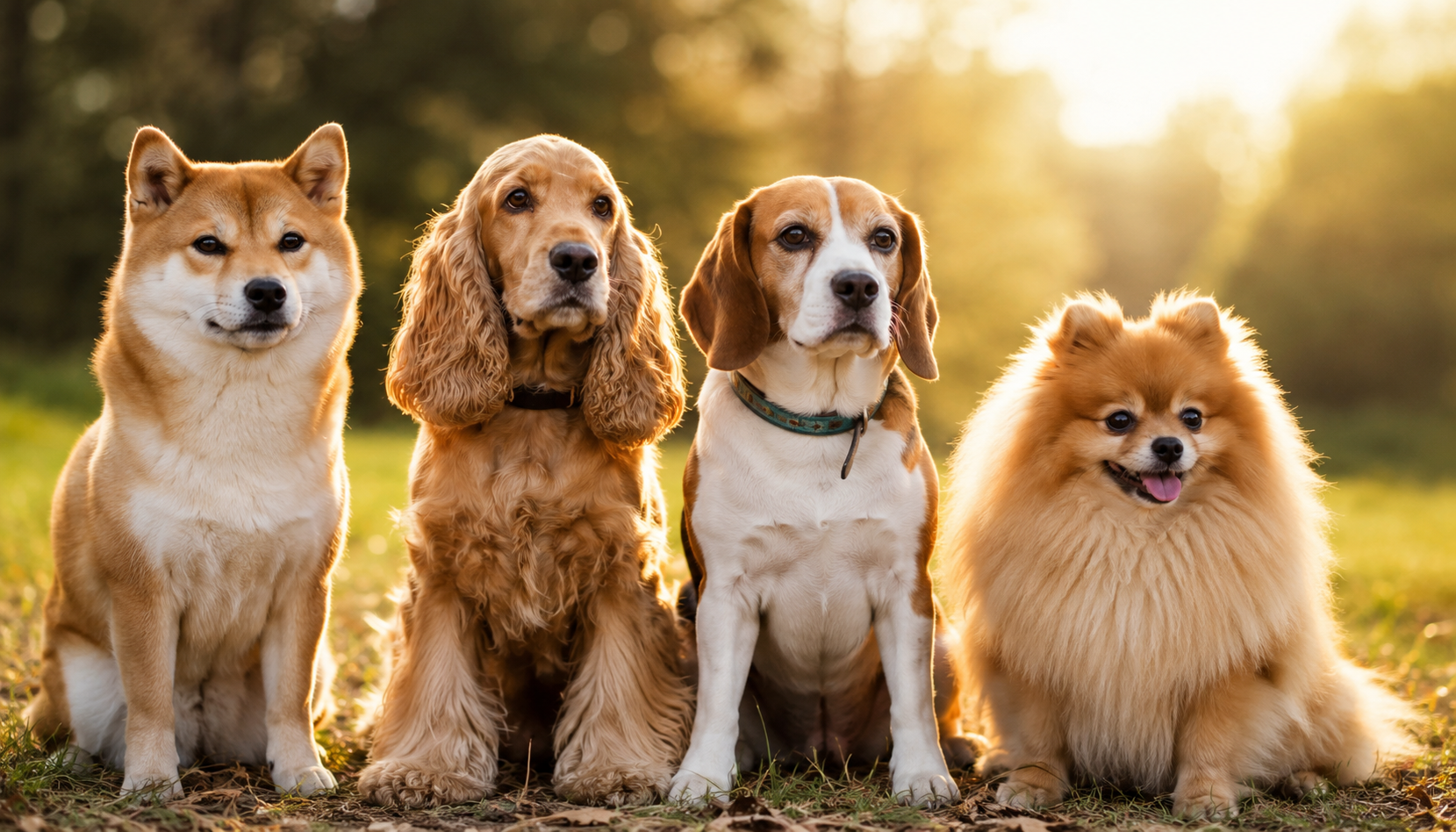
The Shiba Inu is probably the most recognizable of the orange dog breeds at this point, largely thanks to the internet. That rich orange-red coat, the white markings on the chest and cheeks, the pointy ears, and the curled tail give them a look that’s equal parts fox and stuffed animal.
They’re an ancient breed from Japan with a personality that is completely their own. Confident, clean, independent, and occasionally dramatic in a way that is uniquely Shiba.
They’re not the easiest dogs for new owners because they come with a bit of a steep learning curve when it comes to training. They’re intelligent dogs but they apply that intelligence on their own terms. Early socialization and proper training are genuinely non-negotiable with this breed, and even then you’re working with a dog that has strong opinions about everything.
- Health notes: Hip dysplasia, patellar luxation, and eye conditions are the most common concerns.
- Lifespan: 13 to 16 years.
- Cost: $1,400 — $3,500.
- Best for: Experienced owners, those who appreciate an independent and spirited companion.
American English Coonhound

The American English Coonhound often comes in orange and white color combinations that are really beautiful. These are classic hunting dogs bred for endurance and scent work, and they have that lean, athletic build that reflects exactly what they were designed for.
They’re not the most common dogs you’ll see at a typical dog park, but among hunting communities they’re well respected. They’re playful dogs with a lot of energy and a nose that will get them into trouble if they catch an interesting scent on a walk.
- Health notes: Hip dysplasia and ear infections are the most frequently seen issues given their long floppy ears.
- Lifespan:11 to 12 years.
- Cost: $800 — $1,500.
- Best for: Hunters, active owners with secure outdoor space.
English Cocker Spaniels

English Cocker Spaniels in golden orange tones are absolutely gorgeous. That silky, wavy coat in warm orange or golden red is one of the most elegant appearances in the spaniel family.
They’re great family pets, affectionate and playful, and they adapt well to different living situations as long as they get regular exercise. Regular grooming is a must because that beautiful coat tangles easily, but most cocker spaniel owners will tell you the grooming routine becomes a bonding experience over time.
- Health notes: Progressive retinal atrophy, hip dysplasia, and ear infections are the most common concerns.
- Lifespan: 12 to 14 years.
- Cost: $800 — $2,000.
- Best for: Families, active individuals, those who enjoy regular grooming routines.
Red Golden Retriever

Most people do not realize the golden retriever comes in a deep rusty red variation — and it is stunning.
The red golden retriever is not a separate breed. It is a color variation within the golden retriever family that carries a noticeably richer, darker coat that sits firmly in orange-red territory. Many red goldens also have lighter cream or white markings on the chest and paws, which gives them that warm two-tone contrast this article is all about.
They share all the qualities that make golden retrievers one of the most popular dog breeds — gentle, trainable, deeply loyal, and endlessly affectionate with families. The coat is longer and requires regular brushing to stay healthy and tangle-free, but for most golden retriever owners that grooming routine becomes one of the best parts of the day.
- Health issues: Cancer rates are higher in golden retrievers than most breeds. Hip and elbow dysplasia are also common. Health testing from breeders is essential.
- Lifespan: 10 to 12 years.
- Cost: $1,000 — $3,000. Red goldens from reputable breeders can sit at the higher end.
- Best for: Families, first time owners, active individuals — one of the most versatile and universally loved breeds in the world.
Brittany Spaniel

The Brittany is one of the most classically orange and white dogs in existence — and one that does not always get the attention it deserves.
Their coat comes in bright orange and white or liver and white, and that bold two-tone pattern on a medium-sized athletic frame is immediately eye-catching. Originally bred as a bird dog in France, the Brittany is energetic, eager, and one of the most trainable sporting breeds you will find.
As a French hound type, their history as a working field dog is written into every instinct they carry. They thrive with active owners and genuinely love having a job to do. A Brittany that gets enough exercise and mental engagement is one of the most rewarding dogs to live with.
- Health notes: Hip dysplasia and epilepsy are the most commonly seen health concerns in the breed.
- Lifespan: 12 to 14 years.
- Cost: $700 — $2,000.
- Best for: Active families, hunters, owners who enjoy dog sports and outdoor activity.
Beagle

The Beagle in its classic tricolor or lemon and white variation often carries warm orange and white tones that absolutely qualify it for this list.
That compact build, the long floppy ears, the expressive dark eyes, and that cheerful tail-up trot make them one of the most universally loved small dogs in the world. They are friendly, curious, and gentle — genuinely great family dogs.
The catch is that nose. Beagles are scent hounds and once they lock onto an interesting smell, the outside world ceases to exist. A securely fenced yard is not optional with this breed.
- Health notes: Obesity, hip dysplasia, and epilepsy are the most frequently seen issues.
- Lifespan: 10 to 15 years.
- Cost:$500 — $1,500.
- Best for: Families, first time owners, those with securely fenced outdoor space.
Basset Hound

The Basset Hound in its classic tan and white or orange and white coloring is one of the most recognizable dogs in the world — and one of the most loveable.
Long ears that drag along the ground, a low-slung body, droopy eyes, and a personality that is equal parts stubborn and endearing. They were bred as scent hounds and they are extraordinarily good at it.
As family dogs they are gentle, patient, and surprisingly good with children. They are not high energy dogs by any stretch — a moderate daily walk suits them perfectly. But that nose means a secure fence is absolutely necessary.
- Health notes: Obesity, ear infections, and joint issues related to their long body and short legs are the main concerns.
- Lifespan: 10 to 12 years.
- Cost: $600 — $1,500.
- Best for: Families, those wanting a calm easygoing companion, owners with securely fenced yards.
Shetland Sheepdog

The Shetland Sheepdog in sable coloring produces one of the most beautiful orange and white coats in the dog world.
That flowing double-layered coat in warm golden sable with white markings on the collar, chest, and paws is a classic elegant look that never gets old. Shelties are consistently ranked among the most intelligent breeds and their eagerness to please makes them highly trainable. They genuinely thrive with mental stimulation and are exceptional family dogs.
The coat needs regular brushing to stay tangle-free — but for people who love a flowing dramatic coat the maintenance is absolutely worth it.
- Health notes: Collie eye anomaly, hip dysplasia, and thyroid issues are the most frequently seen conditions.
- Lifespan: 12 to 14 years.
- Cost: $900 — $2,500.
- Best for: Families, active households, owners who enjoy training and dog sports.
Similar orange and white dog breeds Worth Knowing
If you are drawn to bold two-tone coats, a few other breeds are worth having on your radar even though they sit slightly outside the strict orange and white category.
- The Cavalier King Charles Spaniel in Blenheim coloring carries a rich chestnut orange against a pearly white coat — one of the most refined two-tone looks in any small breed.
- The Bernese Mountain Dog and Saint Bernard both carry striking multi-tone coats with warm orange-brown and white combinations that share the same bold contrast.
- The Dogo Argentino, while exclusively white, is sometimes compared to orange and white breeds in terms of coat impact and presence. None of these are strict orange and white dogs — but if the two-tone aesthetic is what drew you here, they are all worth a look.
Putting It All Together
What I love about going down this rabbit hole of orange and white dog breeds is that the coat color really is just the starting point. Every breed on this list has its own history, its own personality, and its own set of needs that have nothing to do with how it looks.
The best thing any pet parent can do is look past the coat color that catches their eye and ask the harder questions. What’s the energy level like? What does the coat actually require? How does this breed do with kids, with other small animals, with strangers? Is the dog’s stage of life compatible with what you can offer right now?
Get those answers right, and you’ll end up with a healthy, happy dog that happens to also be gorgeous. And really, what more could you ask for.
Frequently Asked Questions
What dog breeds are orange and white?
Several breeds carry true orange and white coats including the Nova Scotia Duck Tolling Retriever, Shiba Inu, Brittany Spaniel, American English Coonhound, English Cocker Spaniel, Beagle, Basset Hound, and Shetland Sheepdog in sable coloring.
Are orange and white dogs rare?
Not particularly. Several well-known and widely available breeds carry orange and white coats. Some specific color patterns within breeds — like the orange roan English Cocker Spaniel — are less common than others but not considered rare overall.
Do orange and white dogs require more grooming?
It depends entirely on coat type rather than color. The Shiba Inu and Beagle are relatively low maintenance. The Shetland Sheepdog and English Cocker Spaniel require consistent regular grooming to keep their coats healthy and tangle-free.
What is the best orange and white dog for families?
The Brittany Spaniel, Beagle, and Shetland Sheepdog are all excellent family choices. Each is friendly, trainable, and good with children when properly socialized. The right choice depends on your activity level and living situation.
What is the small orange and white dog breed?
The Shiba Inu and the Beagle are both small to medium breeds that commonly appear in orange and white. The Brittany Spaniel sits in the medium range and is one of the most classically two-toned orange and white dogs you will find.
What is the orange and white dog that looks like a fox?
The Shiba Inu is the most common answer. Their rich orange-red coat, pointed ears, white facial markings, and curled tail give them a distinctly fox-like appearance. The Nova Scotia Duck Tolling Retriever also carries strong fox-like looks with its deep orange coat and white markings.
Final Thoughts
Orange and white dog breeds cover a surprisingly wide range of sizes, temperaments, and lifestyles.
From the athletic, fox-red Toller to the gentle, floppy-eared Basset Hound — the common thread is that bold, warm coat paired with crisp white markings that makes these dogs impossible to walk past without a second look.
But as always, the coat is just the starting point. The breed history, the energy level, the grooming commitment, and the temperament are what you actually live with every single day. Get that match right and you will end up with a healthy, happy dog that also happens to be one of the most beautiful things you have ever seen.
They are worth every bit of the research.
This blog talked about orange and white dog breeds. You might also enjoy: