
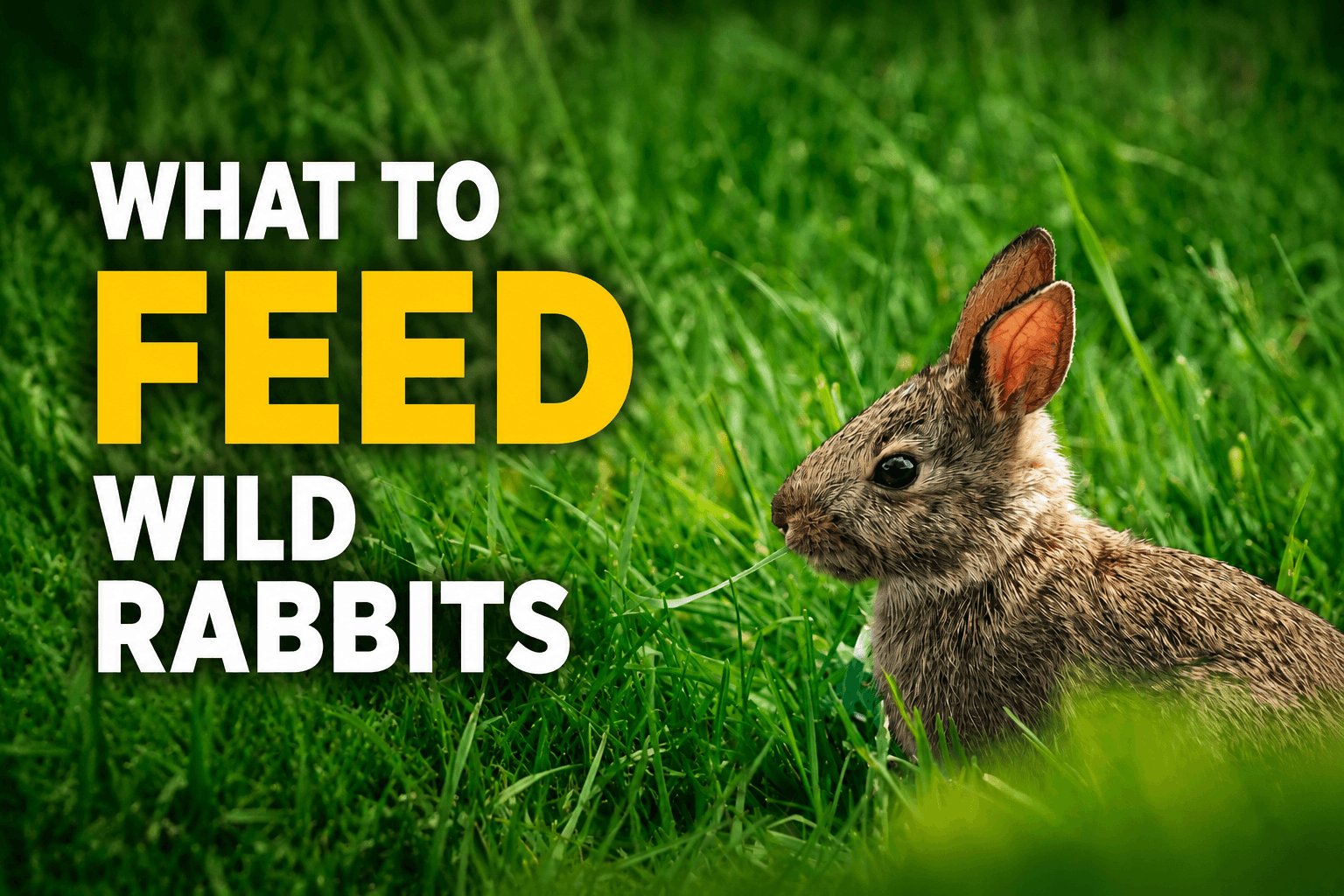
When I first started learning about what to feed wild rabbits, I realized most people including me at first get it a bit wrong. I used to think you could just toss some carrot tops or fresh fruit toward a wild bunny and that would be enough. Turns out, that’s really not how their diet works at all.
Wild bunnies depend on a very specific kind of food, and their entire diet is built around high-fiber plant life that keeps their digestive system working the way it’s supposed to. If you don’t understand that balance going in, you can easily end up causing harm instead of helping.
The Natural Diet of Wild Rabbits
Wild rabbits do not wait for food to come to them. They are constantly on the move, grazing and foraging throughout the day. They follow their instincts to find fresh food throughout the day
Their diet is built almost entirely around fresh grass, leafy plants, and wild greens. The high-fiber plant material keeps their digestive system healthy and running smoothly. This is not supplemental food. It is the foundation of their survival.
Whether you’re talking about European rabbits or other wild species, their diets are very similar to one another, built around continuous grazing rather than sitting down to large meals at set times.
Wild Rabbit Diet by Life Stage
What surprised me most is just how much of a wild rabbit’s day revolves around eating. Unlike pet rabbits fed on a schedule, wild rabbits have to find everything themselves. That means their diet naturally shifts depending on the time of year.
During warmer months, fresh greens are abundant and easy to find.
Come winter months, food gets scarce, and rabbits adapt by relying more heavily on dry food material and grass hay to get through the cold.That seasonal flexibility is a big part of how they survive year-round.
Why Fiber Is Non-Negotiable
A rabbit’s digestive system needs roughage moving through it continuously. When that stops — even for a few hours — serious digestive problems can develop fast. Their grazing behavior is not just habit. It is a biological necessity.
On top of that, their teeth never stop growing throughout their lives, and chewing on fibrous grasses and hay is what naturally keeps those teeth worn down to a healthy length. . Without the right food, dental disease becomes one of the most common and painful health problems wild rabbits face.
What Wild Baby Rabbits Eat
Wild baby bunnies have a completely different situation compared to adult rabbits. A wild baby rabbit’s diet starts entirely with mother’s milk, which is their first and most critical source of nutrition in those early weeks of life.
Mother’s milk is packed with everything they need at that stage vitamins, fat, protein and nothing else comes close to replacing it properly.
Here is something most people do not know: if you spot a helpless baby rabbit sitting alone in a yard or field, it almost certainly has not been abandoned. Mother rabbits leave the nest regularly throughout the day to feed and avoid drawing predators to the location. They return when it feels safe. A baby rabbit that looks alone is usually just waiting.
If you’ve genuinely confirmed that a baby bunny is orphaned meaning the mother hasn’t returned after an extended period and the babies are showing signs of distress then temporary intervention may be necessary. In that case:
- Do not attempt to feed them on your own
- Contact a licensed wildlife rehabilitator immediately
- If advised, kitten milk replacer can serve as a temporary substitute — but only under professional guidance. The wrong formula at the wrong stage can be fatal and cause serious damage to their digestive system
As they grow and develop over the following weeks, baby wild rabbits slowly start transitioning toward solid foods. This shift happens gradually and naturally.
A young rabbit approaching a few weeks of age will begin nibbling on leafy plants and grass hay, mirroring what adult rabbits eat. Their digestive system matures alongside this transition, and by the time they’re fully weaned, they’re eating much the same diet as any adult wild rabbit would. That progression from mother’s milk to soft greens to fibrous hay follows a natural timeline that shouldn’t be rushed or interfered with unnecessarily.

What to Feed Adult Wild Rabbits
Once rabbits reach adulthood, their diet becomes stable and straightforward — centered entirely on high-fiber, natural plant material.
The best diet for wild rabbits include:
- Fresh grass (their number one staple)
- Timothy hay or grass hay
- Dandelion greens
- Carrot tops
- Other leafy wild plants they would naturally forage
These foods do two things at once: keep digestion moving properly and provide the continuous chewing that prevents dental problems. Both depend on the rabbit having consistent access to the right plant material.
What Not to Feed Wild Rabbits
This part matters just as much as knowing what to offer.
Avoid these foods entirely:
- Iceberg lettuce — almost zero nutritional value, upsets digestion
- Fruit — too high in sugar for a wild rabbit’s system
- Dairy products— their digestive systems cannot process it
- Pellets or packaged domestic rabbits food — formulated for pet rabbits, not wild ones
- Bread, crackers, or processed human food — causes serious digestive upset
Even foods that seem harmless — things you might feed a pet rabbit without a second thought — can genuinely hurt a wild rabbit whose system has adapted to entirely natural food sources. When in doubt, if it does not grow in a field or a garden, do not offer it.
Do Not Forget Water
Fresh water is just as important as food. Hydration plays a direct role in keeping a rabbit’s digestion healthy, and a wild rabbit with food but no water is still at risk.
If you are providing support for a wild rabbit, a shallow dish of clean, fresh water alongside natural greens is one of the simplest and most genuinely helpful things you can do.

Should You Feed Wild Rabbits at All?
This is the question worth sitting with before you do anything.
Wild rabbits are prey animals. They naturally stay very still and quiet — even when completely healthy. A rabbit sitting motionless in your yard is not necessarily sick or in trouble. That might simply be what resting looks like for them.
Before offering any food, ask yourself:
- Is this rabbit actually in distress, or does it just look that way?
- Is there a visible injury?
- Has it been in the same spot, unmoving, for several hours?
If you are genuinely unsure, observe from a distance first. Most of the time, the rabbit will move on when it feels safe to do so.
If something does seem wrong, the most helpful thing you can do is contact a local wildlife rehabilitator rather than attempting to intervene yourself. These are people trained specifically to understand what wild rabbits need at every stage of life — the right food, the right handling, and crucially, when to step in versus when to walk away.
Good intentions are not enough on their own. The right knowledge makes all the difference.
Final Thoughts
At the end of the day, feeding wild rabbits isn’t about offering them whatever food happens to be nearby. It’s about understanding how they actually survive and respecting the diet their bodies were built around. Fresh plant material, high-fiber grasses and hay, natural leafy greens, and consistent access to clean water those are the foundations.
Whether you’re dealing with a nursing baby, a young rabbit transitioning to solid food, or a fully grown adult, each stage of life depends on getting that balance right.If there’s one thing worth holding onto from all of this, it’s that the best way to help a wild rabbit is usually to let it be, or to offer only minimal, natural support when it’s genuinely needed.
Their survival depends on their instincts, their environment, and their ability to find the right food on their own. That system has worked for a very long time, and the most helpful thing we can do is avoid getting in the way of it.
This blog talked about what to feed wild rabbits, you might also enjoy: