
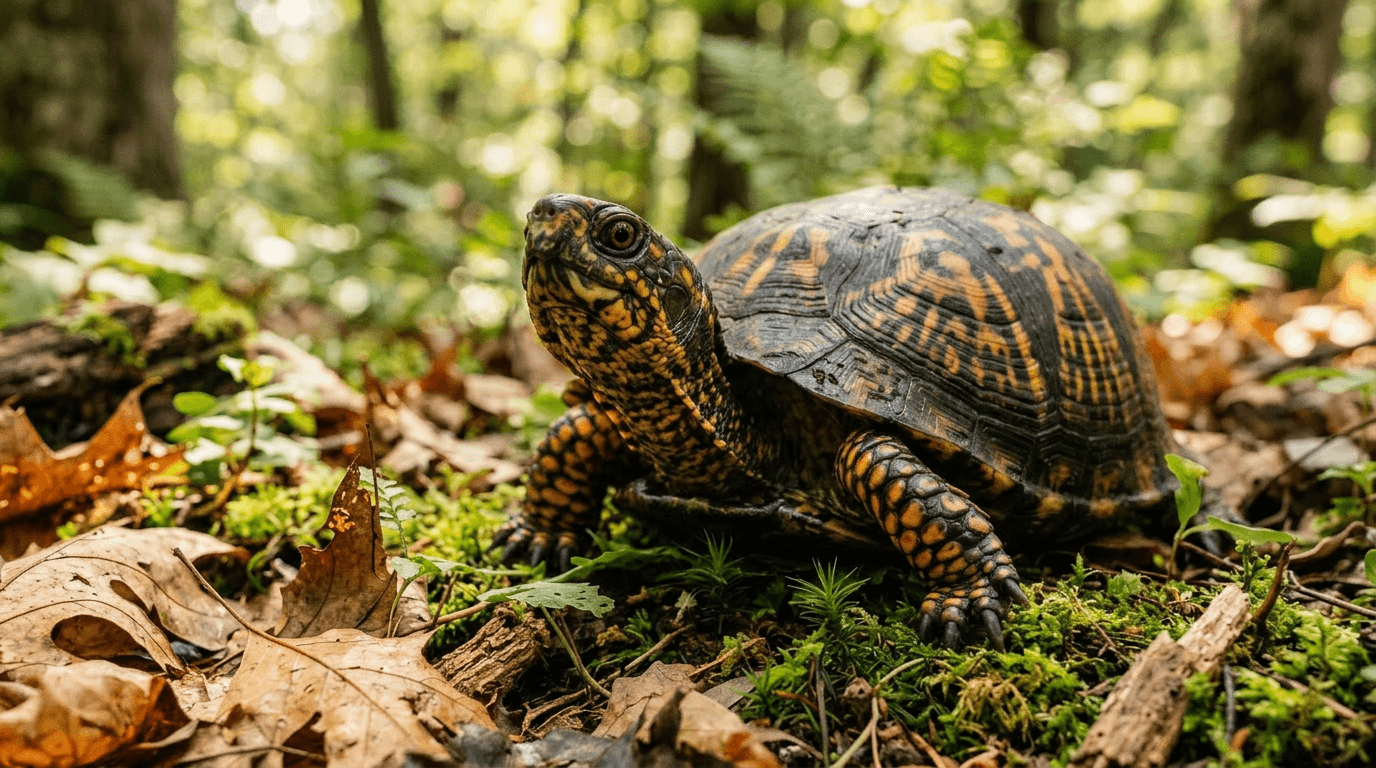
what do box turtles eat is a far more interesting question than most people expect. These are omnivores with a diet that shifts with age, season, and environment. Understanding that shift is the difference between a thriving turtle and one that quietly declines.
Here is everything worth knowing.
What Box Turtles Actually Are
Before getting into food, a little context helps.
Box turtles are a fascinating turtle species found across North America — particularly throughout the eastern United States and into southern regions and northern regions depending on the subspecies.
Unlike aquatic turtles that spend most of their lives in water, most box turtles are terrestrial. They roam the forest floor, dig through leaf litter, and move through loose soil searching for food and shelter across a variety of habitats.
Species like the eastern box turtle, three-toed box turtles, Florida box turtles, the gulf coast box turtle, the ornate box turtle, and the plains box turtle all share similar feeding habits despite living in different regions.
The common box turtle — technically the subspecies of terrapene carolina — is the one most people encounter in the eastern United States and in pet stores.
One unique feature worth knowing: box turtles have a hinged plastron that allows them to completely seal their shell. They also have a strong homing instinct — staying within a specific home range their entire life.
Moving a wild box turtle even a short distance can disorient it permanently, cutting it off from familiar food sources.

What Box Turtles Can and Cannot Eat
✅ Foods Box Turtles Can Eat
Protein sources:
- Earthworms — a staple food item across all ages
- Crickets and mealworms
- Slugs and beetles found naturally on the forest floor
- Hard boiled egg occasionally
- Small amounts of cooked lean meat as an occasional treat
Fruits and berries:
- Strawberries, blueberries, blackberries
- Black cherry — a natural favorite in the wild
- Watermelon and cantaloupe in moderation
Vegetables and greens:
- Leafy greens — collard greens, mustard greens, dandelion greens
- Squash, carrots, sweet potato
- Mushrooms — an important part of their natural diet
- Variety of vegetables for nutritional balance
Supplements:
- High quality pellet as a dietary supplement
- Calcium powder dusted on food regularly
- Multivitamin supplement once or twice a week for indoor turtles
❌ Foods to Avoid
- Cat food — too high in fat and salt, harmful long term
- Dairy products — digestive systems cannot process them
- Avocado — toxic
- Iceberg lettuce — near zero nutritional value
- Fireflies — highly toxic, potentially fatal
- Processed human food of any kind
- Anything with artificial additives or seasoning
What Wild Box Turtles Eat
Wild box turtles are opportunistic eaters — they consume whatever their environment provides and their diet composition reflects that completely.
A typical day of foraging for a wild turtle in late morning when temperatures are warmest might include earthworms pulled from loose soil, wild berries found along a forest path, beetles and slugs discovered under leaf litter, and mushrooms growing near the base of trees.
The turtle’s diet in the wild is naturally balanced across plant-based foodsand animal-based foods in a way that meets all their nutritional needs without any human intervention.
Wild populations across North America have evolved to eat this way over thousands of years. Their role in seed dispersal — carrying fruit seeds through their digestive systems and depositing them across their home range — makes them genuinely important members of their ecosystems.

How Diet Changes With Age
This is one of the most important things any box turtle owner or observer needs to understand — and one of the things most general guides get wrong.
Young box turtles and younger turtles are significantly more carnivorous than adults. In their early years protein is the priority.
Earthworms, crickets, beetles, and other insects make up a much larger portion of the young turtles’ diet because their bodies need that protein for rapid growth and development.
As they transition into adult box turtles — typically from around five years of age onward — the diet naturally shifts toward more plant material.
Fruits, leafy greens, mushrooms, and variety of vegetables take up a larger share of their daily intake. Protein does not disappear from the diet entirely but it becomes a smaller component.
Younger box turtles that do not get enough protein struggle to grow properly. Adult box turtles that eat too much protein and not enough plant material can develop kidney problems over time. Getting the balance right at each life stage is the foundation of a healthy diet and long-term overall health.

Feeding Pet Box Turtles
Pet turtles have the same dietary needs as their wild counterparts — they just depend entirely on you to meet those needs.
The best way to structure a pet box turtle’s meals is roughly 50% animal-based protein and 50% plant-based foods for younger box turtles, shifting toward 30% protein and 70% plant material for adult box turtles. This mirrors what happens naturally in wild populations as turtles age.
A turtle pellet from a reputable brand can be used as a supplement to fill nutritional gaps — but it should never be the foundation of the box turtle’s diet. Pellets alongside real food is the right approach. Pellets alone is not.
Calcium deserves special attention. Without adequate calcium box turtles develop serious shell and bone problems. Dust food with calcium powder at most feedings.
A good calcium-to-phosphorus ratio in the diet supports shell health throughout their entire life. Some owners and veterinary experts also recommend calcium gluconate for turtles showing signs of deficiency.
A multivitamin supplement added to food once or twice a week helps cover any gaps — particularly for indoor pet turtles that do not benefit from natural sunlight and the variety of food sources a wild environment provides.
Fresh water and clean water must always be available. A shallow dish that allows the turtle to drink and soak is ideal — especially during late summer when dehydration risk is higher. Change the water daily to keep it genuinely clean.
Seasonal Changes in Diet
Seasonal variations in feeding behavior are completely normal — and something every owner of pet turtles should understand.
During warmer months box turtles are most active in late morning before temperatures peak. This is when foraging is most intense and appetite is highest. As temperatures begin to drop in early fall, appetite naturally decreases. The turtle is preparing for a period of inactivity through cooler months.
During cooler temperatures wild box turtles significantly reduce their food intake — sometimes stopping almost entirely. Pet turtles kept indoors may not show this shift as dramatically but many still eat less in winter months. This is normal and not a cause for concern as long as the turtle stays hydrated and maintains a healthy weight.
Frequently Asked Questions
What do box turtles eat in the wild?
Wild box turtles eat a wide variety of foods including earthworms, insects, berries, mushrooms, leafy greens, and plant material found on the forest floor. Their diet composition shifts with the seasons and with age — younger turtles eat more protein while adult box turtles eat more plant-based foods.
What foods are toxic to box turtles?
Fireflies are the most dangerous — potentially fatal even in small amounts. Avocado, dairy products, cat food, iceberg lettuce, and all processed human food should be avoided entirely.
How often should I feed my box turtle?
Young box turtles benefit from daily feeding. Adult box turtles do well with feeding every other day. Always remove uneaten food promptly to maintain a clean enclosure and avoid bacterial growth.
Can box turtles eat fruit?
Yes — fruit is an important natural food group for box turtles. Berries, black cherry, watermelon, and melon are all good options. Fruit should be part of a varied diet rather than the main food source due to sugar content.
Do box turtles eat meat?
Yes — animal-based protein is an essential part of a box turtle’s healthy diet at every life stage. Earthworms, crickets, and beetles are the most natural protein sources. The proportion of protein in the diet decreases as the turtle reaches adulthood but never disappears entirely.
Final Thoughts
Understanding what do box turtles eat is really understanding how these animals survive — opportunistically, seasonally, and with far more variety than most people expect.
Whether you are watching wild box turtles forage across the eastern United States or feeding pet turtles at home, the principle is the same. Variety, balance, proper calcium, and clean water are the foundations of their overall health for their entire lives.
Get those fundamentals right and a box turtle can thrive under your care for decades — which is exactly what an animal with this much natural complexity deserves.
This blog talked about what do box turtles eat, you might also enjoy: