
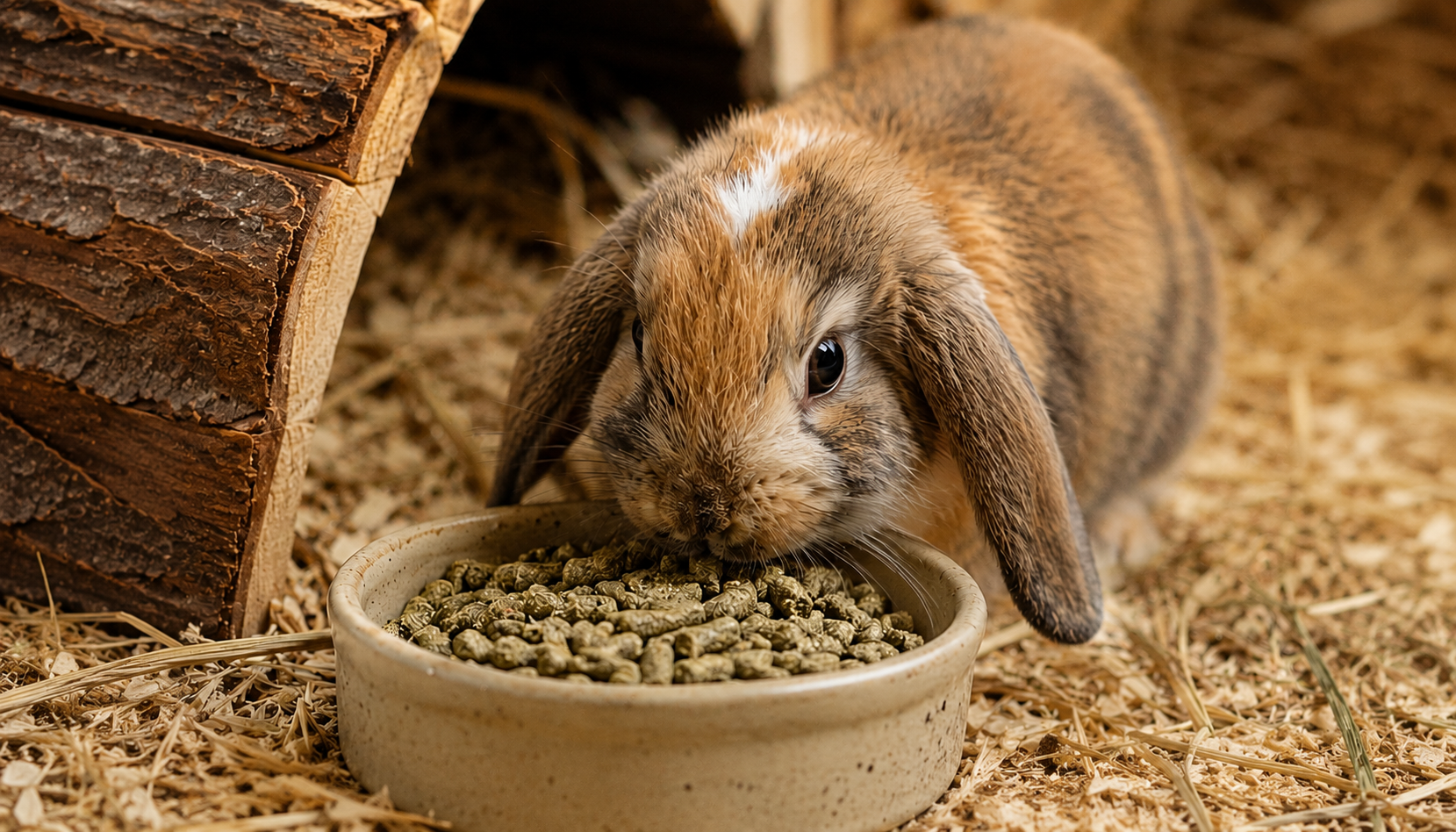
So I’ll be honest, I never really thought much about what goes into rabbit pellets until I started digging into my rabbit’s diet a bit more seriously. I just grabbed a bag off the shelf at one of those pet stores, assumed it was fine, and moved on. But once I looked at the ingredient list, I realized there was a lot more going on in that little green nugget than I ever expected.
What are rabbit pellets made of ?
The Base Ingredients..
Most commercial rabbit pellets start with some kind of hay or grain base. You’ll usually see things like alfalfa meal, wheat middlings, wheat bran, or dehulled soybean meal right at the top of the list.
These are the raw materials that give the pellet its structure and its core nutritional value. Alfalfa-based pellets are really common, and they’re great for young rabbits and baby rabbits because they’re high in protein and calcium, which growing bodies need.
But for adult rabbits and mature rabbits, you actually want to be a little more careful with alfalfa because too much calcium over time can cause issues.
That’s why a lot of rabbit owners eventually switch to timothy-based pellets once their rabbits are grown. Timothy hay is lower in calcium and higher in fiber, which is why it better suits the needs of a healthy adult rabbit. Either way, the hay base is doing a lot of heavy lifting in terms of keeping things balanced.
The Added Vitamins
Here’s where the ingredient list starts to look a little intimidating, and I totally get it. Thiamine mononitrate, riboflavin supplement, niacin supplement, pyridoxine hydrochloride, folic acid, and choline chloride are all listed back to back, and it reads like a chemistry exam.
But these are all just forms of vitamin b, and they’re essential vitamins that rabbits need but can’t always get in large enough amounts from hay alone.
Then you’ve got vitamin a supplement, vitamin d, and vitamin e supplement, which support everything from eyesight, including things the human eyes can’t even pick up, to bone health and immune function.
Vitamin c sometimes shows up too, though rabbits actually produce their own, so it’s more of a bonus than a necessity. The point is, these aren’t scary additives. They’re just nutrients that fill in The gaps and make sure your rabbit is getting complete nutrition from one source.

The Minerals
Alongside the vitamins, you’ve got a whole list of minerals. Things like calcium carbonate, dicalcium phosphate, magnesium oxide, ferrous sulfate, zinc oxide, zinc sulfate, manganous oxide, copper sulfate, copper proteinate, and sodium selenite. Again, it looks like a lot, but each one is there for a reason and usually added in small quantities.
Calcium and phosphorus support bone structure. Iron from ferrous sulfate helps with healthy blood. Zinc supports immune function and skin health. Copper helps with coat quality and energy metabolism.
Selenium from sodium selenite is an antioxidant that works alongside vitamin e. These minerals all play a role in your rabbit’s overall good health, and getting the balance right is part of what makes a good quality rabbit pellet actually worth buying.
The Extras That Often Get Overlooked
Some brands, especially the more premium ones, add things like cane molasses as a natural binder, which also makes the pellets a little more palatable.
You might also see dried lactobacillus casei fermentation product, dried enterococcus faecium fermentation product, or acidophilus fermentation product.
These are probiotics, basically friendly bacteria, and they help maintain good intestinal health and support the complex flora of the cecum, which is a really important part of a rabbit’s digestive system.
Rabbits have a unique gut, and keeping that balance healthy is critical. High crude fiber content in the pellets also plays into this, because fiber is what keeps things moving properly and prevents serious health problems like GI stasis down the line.
How Pellets Are Actually Made
The physical process of making pellets is also worth knowing about. Especially if you’re curious about things like cold-pressed pellets versus regular ones. Most commercial rabbit pellets are made using a flat die feed pellet mill, where ingredients are pressed together under high pressure to form that compact shape.
Cold-pressed pellets use lower heat and pressure, which some people prefer because it preserves more of the natural ingredients and doesn’t degrade heat-sensitive vitamins as much.
The crude protein and crude fat levels on the label give you a quick snapshot of the nutritional profile. A pellet with too much crude fat isn’t ideal for adult rabbits who aren’t burning through a ton of calories, and too little crude protein leaves nutritional needs unmet. Reading those numbers is one of the fastest ways to judge the nutritional value of a brand of pellets.
How to Use Rabbit Pellets Properly
Even the best rabbit pellets shouldnt be the whole picture. Grass hay, especially timothy hay, should make up the bulk of a rabbit’s diet and be available ad libitum, meaning always available.
Fresh vegetables, leafy greens, and leafy vegetables add variety and fresh food to the mix. Fresh water and clean water are non-negotiable, obviously.
Pellets should be offered in a small amount once or twice a day, scaled to body weight. They’re a supplement to the rabbit’s diet, not a replacement for hay and fresh greens. Stored in a dry place and bought in small batches or small quantities, they stay fresh longer and maintain their nutritional needs properly.

What to Actually Look For in Rabbits Pellets?
When you’re comparing types of rabbit pellets, look for high-quality rabbit pellets with a short, recognizable ingredient list full of natural ingredients. The best rabbit pellets for adult rabbits are usually timothy-based, fiber-rich, and low in sugar.
For young rabbits, alfalfa-based pellets are the better fit for their different nutritional needs. Whatever you choose, understanding what’s in that bag means you can make a smarter decision for your rabbit’s diet and keep them healthier for the long run.
This blog talked about what are rabbit pellets made of, you might also enjoy: