
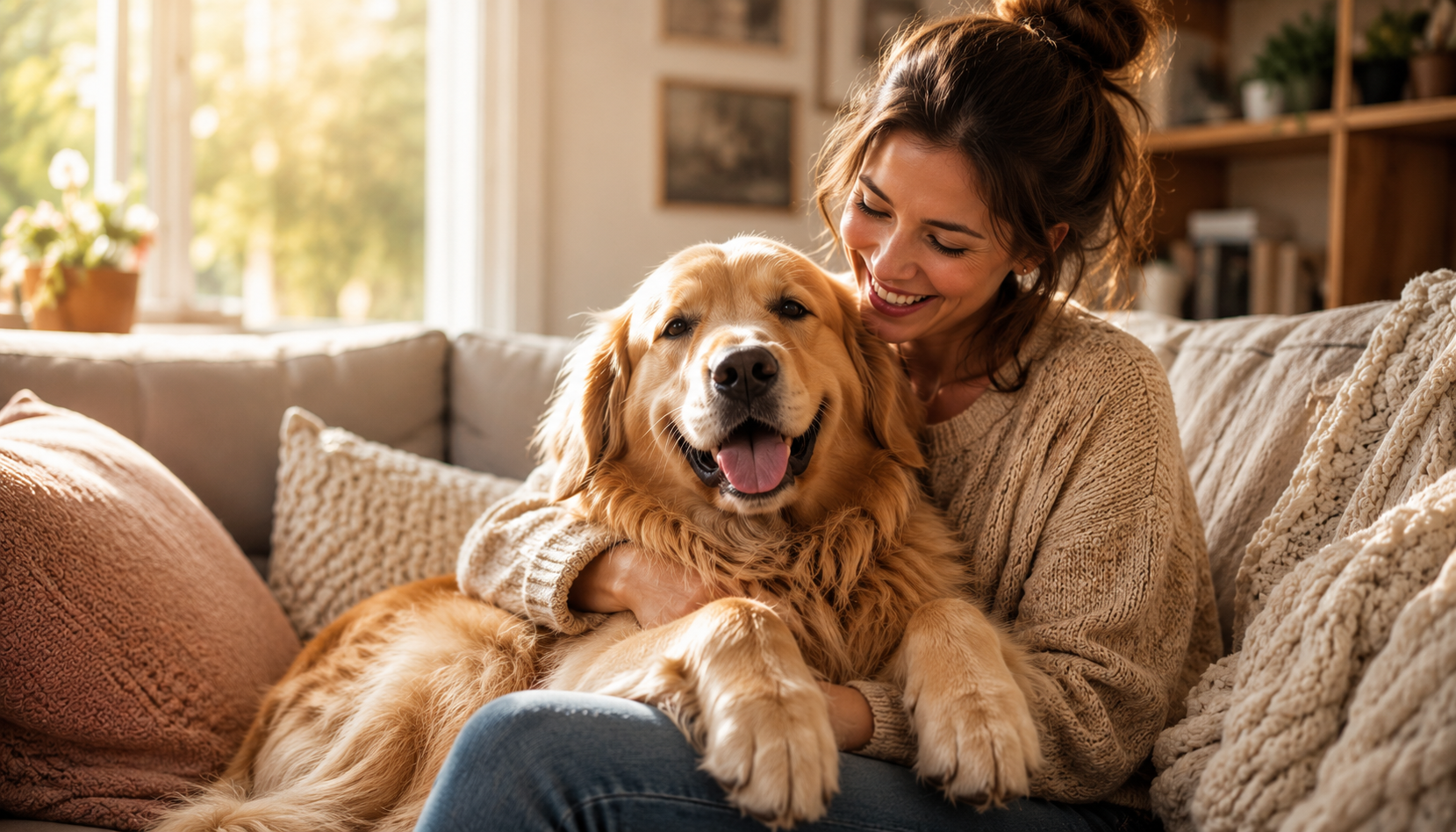
Why does my golden retriever sit on me? Short answer — because you are their favorite place in the world.
But the full answer depends on your dog, your routine, and what is actually going on beneath that adorable behavior. Sometimes it is pure love, sometimes it is anxiety, and Sometimes it is just because you let it happen once and they never forgot.
Here is the full breakdown.
It’s a Sign of Affection and Bonding
One of the most obvious explanations is that it’s a sign of affection. Golden retrievers are known for being extremely loving and loyal family dog companions.
They’re naturally social animals and even pack animals, which means closeness matters to them.
When my dog sits on me, I honestly see it as his dog’s way of saying, “You’re my best friend.” It is about physical contact and physical closeness, something dogs use to strengthen a strong bond with their humans.
Unlike small dogs or toy breeds like Shihtzus, who are often raised as lap dogs, big dogs and large dog breeds do not always realize their size. in they’re prospective, they’re just doing what feels natural, and what could be bonding between the two.
They Feel Safe and Comfortable
Another big reason is comfort. Dogs look for a comfortable place where they feel secure. For many, that ends up being right on top of their favorite human. My dog has a perfectly good dog bed and even a comfy bed in another room, but somehow sitting on me is still his top choice.
This is especially true during the colder months, when your body heat makes you a walking heater. You basically become their cozy spot or even better than a comfy chair. It’s not random, it’s strategic comfort.
It Can Be Learned Behavior
Sometimes, this habit develops because of positive reinforcement. Think about it. The first few times your dog sat on you, you probably laughed, petted them or gave them attention. That teaches them, “Hey, this is a good thing.”
Over time, it becomes a learned usual behavior. Dogs are smart animals, especially golden retrievers and they quickly figure out what gets them attention. In many such cases, sitting on you is simply a behavior that worked before so they keep doing it.

Attention-Seeking After a Long Day
I’ve noticed my dog does this more when I’ve been gone for a long day. It’s like he’s making up for lost quality time. Dogs crave attention, and when they feel like they’ve had less attention, they’ll find different ways to get it, this is something that is considered important to them.
Sitting on you, leaning into you, or even placing their head on the top of your feet or owners’ feet is their way of reconnecting. It’s their version of saying, “Hey, don’t forget about me.”
Anxiety and Emotional Needs
Sometimes, though, it goes a bit deeper. An anxious dog might sit on you because they’re dealing with separation anxiety or other signs of anxiety. This is especially common in velcro dogs, which are dogs that stick to their owners constantly.
In these situations, the behavior isn’t just about affection it’s about feeling safe. Dogs are very tuned in to human emotion, and they often seek emotional support from their owners. That’s part of why some breeds, including golden retrievers, make amazing therapy dogs.
If your dog is showing any other signs of fear, like whining or pacing, sitting on you could be their way of a coping mechanism.
According to experts like Dr. Mary Burch, a certified applied animal behaviorist, and trainers like Wailani Sung, these behaviors often come from a need for reassurance rather than anything negative.
Could It Be Dominance?
A lot of dog owners worry that this is a sign of dominance or part of dominance-related behaviors. I used to think the same thing, wondering if my dog was trying to be the top dogor challenge me as the pack leader.
But honestly, in most cases, that’s not what’s happening. The whole “dominance thing” is often misunderstood. Sitting on you is rarely about control. It’s much more likely tied to comfort, attention, or affection rather than any kind of power move.

Why Golden Retrievers Do This More Than Most Breeds
Not every dog does this. Golden retrievers do it constantly and there is a real reason why.
Golden retrievers were originally bred in the Scottish Highlands as working retrievers, designed to work in close physical partnership with their owners all day long. That history of constant human contact is literally built into their DNA.
Unlike more independent breeds, golden retrievers were never meant to work alone. They were bred to stay close, stay connected, and stay tuned in to the person beside them.
That is why they are classified as one of the ultimate velcro dogs. It is not clinginess — it is instinct. Their emotional sensitivity is also unusually high for a large breed. They pick up on your mood, your energy, and even your stress levels in ways most other dogs simply do not.
When It Might Be a Problem
That said, there are situations where you might want to pay closer attention. If the behavior turns into possessive behavior or even aggressive behavior, like growling when someone tries to move them, it could point to resource guarding or territorial instincts.
This is more common in some rescue dogs or dogs that didn’t have consistent training early on. In these cases, it’s a good idea to consult a professional dog trainer or even a veterinary behaviorist.
If you’re unsure, a veterinary visit can also help rule out any health issues, especially if the behavior suddenly appears in older dogs.
Big Dogs vs Small Dogs
What makes this behavior funny is how different it looks depending on the dog. With smaller breeds or small dogs, sitting on you feels normal.
But with larger dogs or large dog breedslike golden retrievers, great danes, or even Irish setters, it can feel like you’re being crushed.
Still, the intention is the same. Whether it’s a tiny dog or a massive one, they’re just trying to connect with you in their own way.
How I Handle It
Personally, I don’t always mind it. Most of the time, I see it as a sign of a healthy dog’s relationship with me. But there are moments when I need my personal space, and that’s where consistent training comes in.
I’ve worked on gently teaching my dog boundaries. Instead of pushing him away, I guide him to his dog bed or another comfortable place. Over time, he’s learned there’s a better wayto relax nearby without sitting directly on me.
If needed, working with a professional trainer can help reinforce these boundaries in a positive way.
Reading Your Dog’s Body Language
One thing that really helped me understand this behavior better is learning to read my dog’s body language. The way they approach you matters a lot. If my four-legged friend slowly comes over, leans in, and gently sits, it’s usually a calm moment of connection.
But if he suddenly jumps up, seems restless, or keeps shifting around, that can point to signs of anxiety or even pent-up energy from not getting enough activity.
I’ve noticed that things like a tight posture, excessive panting, or constantly seeking contact can mean more than just affection.
In those moments, I try to respond in different ways, like taking him for a walk, playing, or giving him a bit of structured attention instead of just letting him sit on me. It’s a simple change, but it makes a big difference in how he settles down afterward.
Routine, Exercise, and Balance
Another thing that plays a big role is daily routine. Golden retrievers are active dogs, and if they don’t get enough exercise or mental stimulation, they’ll look for comfort and attention in other ways. Sometimes sitting on you isn’t just about love it’s about boredom or needing an outlet.
I’ve found that regular trips to the dog park, interactive toys, and spending real quality timetogether reduce how often my dog feels the need to climb on me. It creates a better balance.
When their physical and emotional needs are met, their behavior becomes more relaxed and predictable, and that makes life easier for both of us as pet owners.
Frequently Asked Questions
Why does my senior golden retriever sit on me more than before?
An increase in this behavior in an older dog is worth paying attention to. It can simply mean they are slowing down and seeking more comfort — but it can also be a sign of pain, cognitive changes, or anxiety that comes with aging. If the change in behavior is sudden or paired with other symptoms, a vet visit is a sensible next step.
Why does my golden retriever puppy sit on me?
Puppies do this for slightly different reasons than adult dogs. At that age it is mostly about warmth, security, and learning that you are their safe base. It is completely normal puppy behavior and actually a healthy sign of early bonding. How you respond in those early weeks shapes whether it becomes a lifelong habit.
Is it bad to let your golden retriever sit on you?
In most cases no. If the behavior comes from affection, comfort, or bonding it is completely harmless and actually strengthens your relationship. The only time it becomes worth addressing is if it tips into possessive behavior, causes discomfort, or the dog refuses to move when asked.
Why does my golden retriever sit on me when I am sad?
Golden retrievers are remarkably tuned in to human emotion. They read changes in your body language, tone of voice, and even your scent when you are stressed or upset. Sitting on you when you are sad is their version of a hug — instinctive, genuine, and one of the most endearing things about the breed.
This blog talked about why does my golden retriever sit on me. You might also enjoy: