
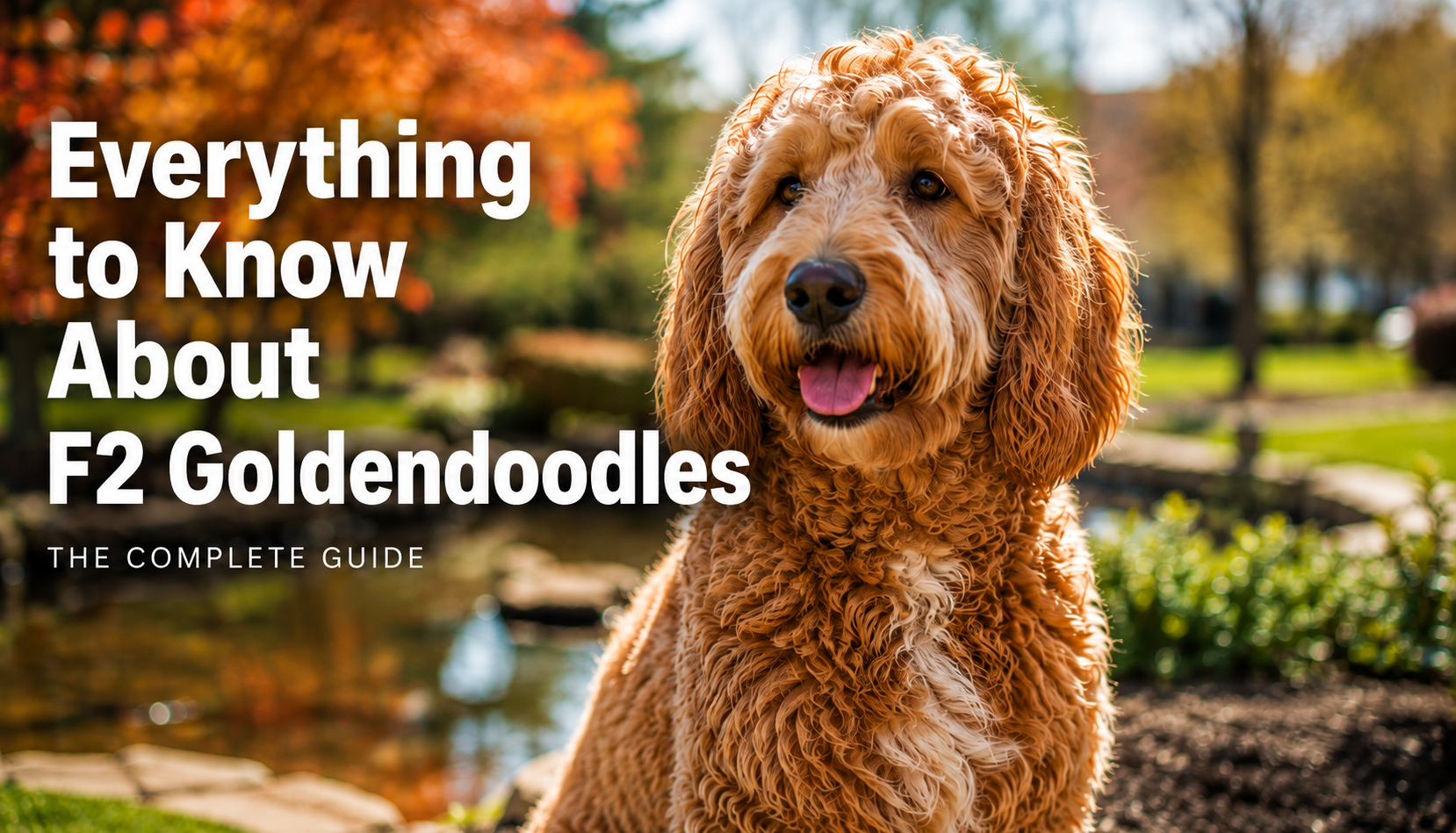
Here is something most goldendoodle articles will not tell you. The 2nd generation goldendoodle is the most genetically unpredictable dog in the entire goldendoodle family.
How Goldendoodle Generations Actually Work
To understand the F2, you need to start at the beginning.
- The first generation goldendoodle, also called thehe F1 goldendoodle is the original hybrid — a direct first cross between a purebred golden retriever and a purebred poodle.
It benefits from hybrid vigor, meaning the genetic diversity from two completely different purebred parents tends to produce healthier, more robust offspring. The coat is usually wavy, sitting somewhere between the golden retriever’s straight fur and the poodle’s curls.
- The F1B goldendoodle is the first backcross — an F1 goldendoodle bred back to a purebred poodle. This pushes more poodle genetics into the mix, producing a curlier coat and better allergy friendliness. It is the most popular choice for allergy sufferers.
- The F2 goldendoodle is what happens when two F1 goldendoodles are bred together. Neither parent is a purebred dog. Both carry that 50/50 golden retriever and poodle genetic mix — and when you combine two hybrids, the range of outcomes in the litter becomes genuinely wide.
That genetic unpredictability is the defining characteristic of the second generation goldendoodle— and it shapes everything from coat type to allergy friendliness to what a puppy looks like at eight weeks old.
What Actually Makes the F2 Different
With an F1 goldendoodle the math is simple. One purebred parent plus another purebred parent equals a predictable starting point.
With an F2 the math gets complicated fast.
The second-generation goldendoodle is the result of a hybrid being bred to another hybrid, meaning neither parent is a purebred dog. Both goldendoodle parents are themselves a mix of golden retriever and poodle, and that mix of traits from the breeds of origin creates a much wider range of possible outcomes in the puppies.
This is where the genetic makeup gets complicated. In a litter of f2 goldendoodle puppies, you can get almost anything. Some puppies might have tighter curls that look almost like a purebred poodle.
Others might have wavy coats closer to what you’d expect from earlier generations. And some, can come out as flat-coated goldendoodles or even improper-coated goldendoodles. Which means they’re missing the furnishing genes that give goldendoodles that fluffy, soft face and the natural look people usually picture when they think of this breed.
That unpredictability is the main thing that sets the second generation of goldendoodles apart. With a first-generation goldendoodle, you have a pretty good idea of what you’re getting because the parent dogs are purebreds with known, consistent traits. With a second-generation hybrid, the genetic diversity is wider, and so is the range of physical traits you might end up with.
2nd generation goldendoodle Size Options
One thing the article needs to address that most F2 guides skip entirely — size varies significantly in second generation litters.
Because neither parent is a purebred, size predictability is lower than in F1 litters. General size ranges look like this:
- Standard F2 goldendoodle — 50 to 90 pounds
- Medium F2 goldendoodle — 30 to 50 pounds
- Mini F2 goldendoodle — 15 to 30 pounds
The mini F2 goldendoodle is produced when a miniature poodle is introduced into the breeding line. Size can still vary within a single litter more than most buyers expect — which is another reason working with a breeder who does genetic testing and careful size tracking matters.
2nd generation goldendoodle Coat Types and Shedding
If there is one thing goldendoodle owners obsess over it is coat type — and for good reason. Coat texture affects shedding, which affects allergies, which affects whether a specific dog actually works for your household.
The F2 goldendoodle coat is genuinely hard to predict without genetic testing. Responsible breeders test their dogs specifically for furnishing genes and curl genes before pairing them. That careful selection process is what separates a reputable breeder from someone just putting two goldendoodles together and hoping for the best.
The Goldendoodle Association of North America has guidelines around this and breeders who take coat quality seriously pay attention to them. Without that level of care the chance of ending up with a flat coat or unpredictable texture increases significantly.
When an F2 does inherit a proper wavy or curly coat with the right furnishing genes the result is beautiful. Natural body length typically sits around three to five inches when left to grow, giving that classic fluffy look. The coat also styles well — fur cut options are genuinely versatile on a well-coated F2.
Shedding: 25% of F2 puppies are non-shedding. 50% are light to heavy shedders. 25% may shed as heavily as a purebred golden retriever — more than either parent.
Are F2 Goldendoodles Good for Allergies?
This is the most important section for a lot of people and the honest answer is straightforward.
The F2 goldendoodle is not the best choice if you have severe allergies.
Because of the unpredictable genetic makeup you cannot guarantee a low-shedding coat the way you can with backcrossed generations. If allergy friendliness is your top priority the better option is the F1BB goldendoodle — the second backcross, where poodle genes dominate and a non-shedding coat is far more consistent.
The F2 can work for people with mild allergies, especially if the individual puppy inherits a curlier coat — but without genetic testing to confirm it, that is a gamble. Go in with eyes open on this one.

F2 Goldendoodle Grooming Requirements
F2 goldendoodles need consistent grooming and the range varies more than with F1 dogs.
Some F2s with tighter curls need brushing almost daily to prevent matting. Others with looser wave patterns are more forgiving and can go a few days between sessions. The general rule regardless of coat texture is a professional groom every six to eight weeks and brushing at home at minimum three times a week.
Tools worth having: a slicker brush, a metal comb, and a dematting tool for behind the ears and under the legs — the spots that tangle fastest. Skipping grooming on a curly or wavy coat leads to matting that can only be resolved by shaving the dog down entirely. Not a situation anyone wants to be in.
Professional grooming costs typically run between $75 and $150 per session depending on location and coat condition — a recurring expense worth factoring into your budget from day one.
2nd Generation Goldendoodle Health Considerations
The F2 goldendoodle does still benefit from some genetic diversity compared to a purebred dog — but less so than the F1. The hybrid vigor advantage diminishes slightly as you move further from the original purebred cross.
Health concerns worth knowing about:
- Hip and elbow dysplasia — common in both golden retrievers and poodles, and therefore relevant in all goldendoodle generations
- Progressive retinal atrophy — an eye condition that appears in poodle lines
- Skin and ear issues — more common in curlier coated dogs due to moisture retention
- Subvalvular aortic stenosis — a heart condition seen occasionally in golden retriever lines
Reputable breeders health test both parent dogs before breeding. Ask for OFA hip clearances, eye certifications, and cardiac testing documentation. A breeder who cannot provide these is a breeder worth walking away from.
Average lifespan: 10 to 15 years with proper care.
How much does 2nd generation goldendoodle Cost?
The F2 goldendoodle typically sits in the following price ranges depending on size, breeder quality, and location:
- Standard F2 — $1,500 to $3,000
- Medium F2 — $1,800 to $3,500
- Mini F2 — $2,000 to $4,000+
Mini F2 goldendoodles often sit at the higher end because of the additional complexity involved in producing consistent smaller sizes. Breeders who invest in genetic testing and health screening also charge more — and that premium is worth it.
A cheap goldendoodle from a breeder cutting corners on health testing is rarely the bargain it appears to be upfront.
Ongoing costs to budget for include professional grooming every six to eight weeks, quality food for a medium to large dog, routine vet care, and pet insurance which is increasingly worth considering for goldendoodles given their known health predispositions.
2nd generation goldendoodle Temperament and Energy
This is where the F2 genuinely shines.
The diverse mix of traits from both the golden retriever parent and the poodle parent tends to produce friendly, intelligent, eager-to-please dogs. The energy level is generally moderate to high, which makes them a great fit for active households but also manageable for families who want a dog that’s engaged without being completely unhinged.
The Backcross Variations Explained
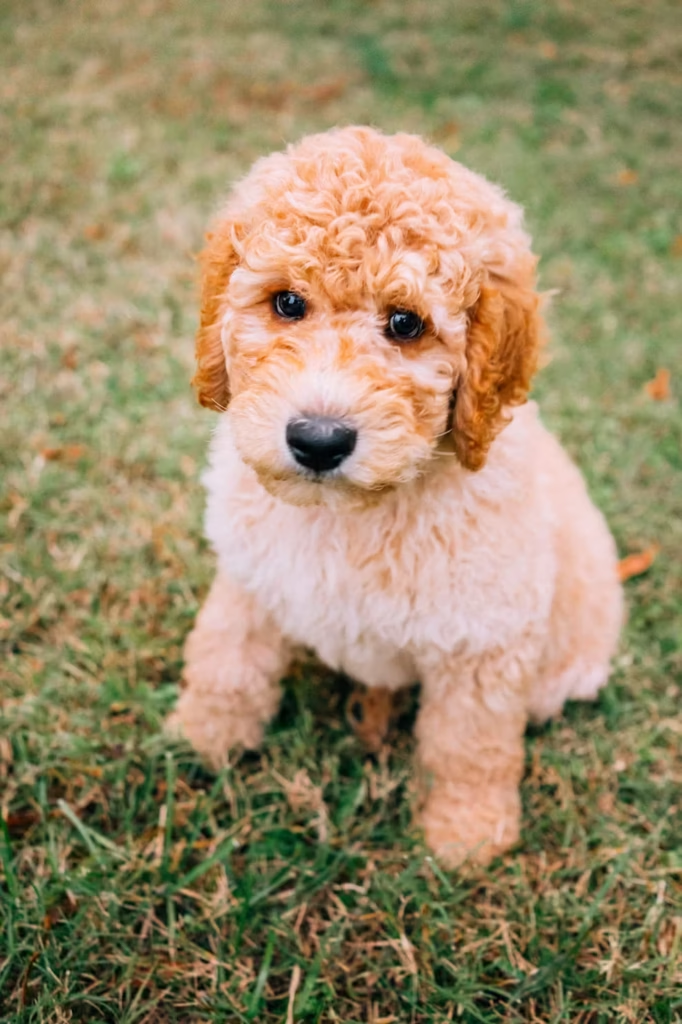
The F2B goldendoodle is produced by breeding an F2 back to a purebred poodle. This increases poodle genetics again, produces more coat consistency, and improves allergy friendliness compared to a straight F2.
It is a popular middle ground for buyers who want some of the F2 genetic diversity but with more predictable coat outcomes.
The F1BB pushes even further — bred back to a purebred poodle a second time, producing a dog that is predominantly poodle in physical characteristics. Best choice for serious allergy sufferers. Least golden retriever influence remaining.
Multigen goldendoodles sit at the far end of the spectrum — dogs from multiple generations of goldendoodle breeding where specific traits have been selected deliberately over time. These tend to be the most consistent in coat type and temperament but carry the least genetic diversity.
Understanding where the F2 sits in relation to these options helps you make a genuinely informed decision rather than just picking a label.
Is the F2 Goldendoodle Right for You?
Here is the honest summary.
Choose an F2 goldendoodle if:
- You love genetic diversity and the slight unpredictability that comes with it
- You do not have severe allergies
- You are working with a reputable breeder who does genetic and health testing
- You want that classic goldendoodle temperament without moving too far from the original hybrid
- You are committed to consistent grooming
Look at other generations if:
- Severe allergies are a concern — consider F1BB or multigen
- You need maximum coat predictability — consider F1B or multigen
- You want the strongest hybrid vigor — go F1
Frequently Asked Questions
How big do F2 goldendoodles get?
Size varies more in F2 litters than in F1 litters because neither parent is a purebred. Standard F2 goldendoodles typically reach 50 to 90 pounds. Medium F2s range from 30 to 50 pounds. Mini F2 goldendoodles generally stay between 15 and 30 pounds depending on the poodle parent used.
What is the difference between an F2 and F2B goldendoodle?
An F2 is produced by breeding two F1 goldendoodles together. An F2B is produced by breeding an F2 back to a purebred poodle. The F2B has more poodle genetics which means better coat consistency and improved allergy friendliness compared to a straight F2.
What is the lifespan of an F2 goldendoodle?
A healthy F2 goldendoodle typically lives between 10 and 15 years with proper care, regular vet checkups, and a quality diet.
Do F2 goldendoodles shed?
Most of them do. Approximately 25% are non-shedding, 50% are light to heavy shedders, and 25% can shed as heavily as a purebred golden retriever. The individual puppy’s coat genes — not the generation label alone — determine actual shedding level.
Final Thoughts
The 2nd generation goldendoodle is not the right dog for everyone. But for the right person it is a genuinely wonderful one.
Go in knowing what the genetic unpredictability means in practice. Work with a breeder who tests rather than guesses. Be honest about your allergy situation. Commit to the grooming.
Do those things and what you get in return is a warm, spirited, deeply loveable dog with all the charm that made goldendoodles one of the most popular breeds in the world.
Worth every bit of the research.
This blog talked about why does my golden retriever sit on me. You might also enjoy: