
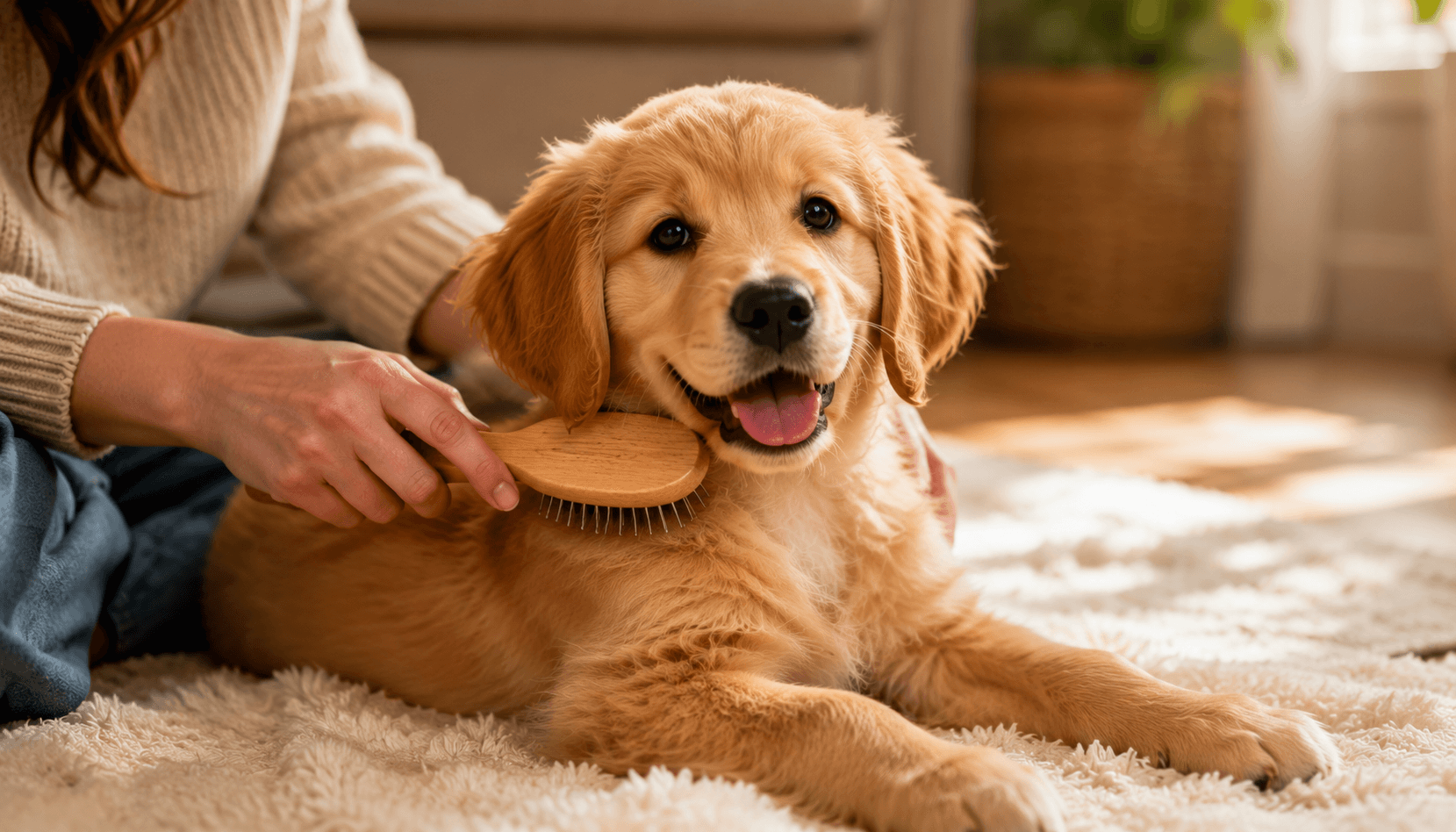
When I first brought my Golden Retriever puppy home, I honestly had no idea when to start brushing him. I knew golden retriever puppies had a thick coat, but I thought grooming was something I could worry about later
Within two weeks of bringing my puppy home, fur was everywhere and I was wishing I had started sooner.
So when to start brushing golden retriever puppy
The best way to introduce golden retriever grooming is to start at a young age. I started brushing my golden retriever puppy around 8 weeks of age, right after bringing him to his new home.
At first, I only brushed him for a few minutes at a time because everything was still a new experience for him. Puppies can get nervous easily, especially during the first time they experience grooming tools touching their body.
The real reason to start early is behavioral. You are teaching your puppy that brushing is normal, safe, and nothing to fear.
Even if the puppy does not need heavy grooming yet, they still learn to stay calm during the grooming process. That matters a lot once their golden retriever’s coat becomes thicker after a few months of age.
Start with just two to three minutes per session. Keep it gentle. Keep it positive. That is all you need in the beginning.
Why Golden Retrievers Need So Much Brushing
Golden retrievers have a double coat, which means they have a soft undercoat beneath the outer layer of fur. Their dense coats are beautiful, but they also trap dead hair, loose undercoat, dirt, and excess hair very easily. Without regular brushing, the dog’s coat can become tangled and messy fast.
I noticed this especially around the ears, tail, and chest area. Loose hair would gather there constantly. If I skipped brushing for several days, the fur became much harder to manage.
Daily brushing was not always necessary when my puppy was very young, but brushing on a regular basis helped a lot.
The golden retriever’s coat also helps control body temperature, so keeping it in top condition is important for overall health. A mat-free coat allows air to move properly through the fur. Mats can trap moisture and even lead to skin irritation or hot spots if ignored too long.

The Coat Change: What to Expect
Golden retriever puppies start life with a soft fluffy coat that is genuinely easy to manage. At around three to six months of age the adult coat begins growing in. This is when grooming becomes significantly more demanding.
By twelve to eighteen months most golden retrievers have their full adult double coat — thicker, denser, and much more prone to matting and shedding than the puppy coat was.
This is the most important reason to start early. A puppy that has been brushed regularly since eight weeks handles the coat change without drama. A puppy that has never been brushed suddenly facing a slicker brush and an undercoat rake at twelve months is going to make everyone’s life difficult.
Using the Right Tools
Using the wrong brush is one of the most common mistakes new golden retriever owners make. What works on a soft puppy coat does not always work on a thick adult coat.
For puppies under six months: A soft bristle brush or a gentle pin brush is all you need. The puppy coat is fine and delicate. Heavy brushes are unnecessary and can feel uncomfortable on sensitive puppy skin.
For puppies six months and older as the adult coat grows in:
- Slicker brush — the workhorse of golden retriever grooming. Removes loose fur, dead hair, and surface tangles effectively
- Pin brush — good for finishing and keeping the outer coat smooth and shiny
- Undercoat rake — essential during shedding seasons for removing loose undercoat before it mats
Always brush in the direction of hair growth. Always go slowly around sensitive areas — the belly, legs, armpits, and around the ears. These spots are where matting starts and where puppies are most sensitive.

Bathing and Keeping the Coat Healthy
I did not bathe my golden retriever puppy too often because overbathing can remove natural oils from the dog’s coat.
Every three to four weeks is generally enough for a golden retriever puppy unless they have rolled in something that demands immediate attention. Use a dog-specific shampoo formulated for sensitive skin.
After each bath, I brushed the coat carefully to remove loose hair and prevent tangles. I also checked the paw pads, ears, and skin for potential problems. Puppies love running around outside, so dirt and small debris can easily get trapped in their fur.
Proper nutrition also plays a huge role in maintaining a healthy coat. I noticed my puppy’s fur looked softer and healthier once I switched him to higher quality food. Good grooming and proper nutrition together really help keep a golden retriever’s coat in excellent condition.
Dental Care
At first, I thought brushing was the only important part of grooming, but I later realized dental care matter just as much. My puppy started losing baby teeth after a few months of age, and adult teeth slowly came in afterward.
Plaque buildup leads to gum disease. Gum disease affects not just the mouth but overall health including the heart and kidneys. Starting a brushing routine with a puppy toothbrush and dog-safe toothpaste from a young age makes it genuinely easy to maintain throughout the dog’s life.
Supplement brushing with appropriate chew toys. Chewing supports dental health between brushing sessions and also helps puppies manage the discomfort of adult teeth coming through.
Nail Trimming Matters Too
Long nails affect how a dog walks and puts pressure on the paw pads and joints over time. Start nail trimming early so it becomes routine rather than a battle.
Trim a small amount at a time, especially at first. The goal in early sessions is not perfect nails. It is teaching the puppy that having their paws handled is normal and nothing to worry about.
Use proper dog nail clippers and trim just the tip of each nail, staying well clear of the quick — the pink blood vessel visible inside light colored nails. If you are unsure ask your vet or groomer to show you the first time. It is easier than most people expect once you have seen it done properly.
Cleaning the Ears Properly
Golden retrievers can get ear infections easily because their floppy ears trap moisture. That is why ear cleaning became part of my routine early on. I gently cleaned the ear canal using cotton balls and dog-safe ear cleaning solution.
I always paid special attention to the dog’s ears after baths or outdoor play. Moisture trapped inside the ears can create skin irritation or infections if ignored. I also checked for bad breath, redness, or unusual smells because those signs sometimes point to health issues.
Ear cleaning may sound small, but it became an important part of keeping my puppy healthy and comfortable.

How to Make Brushing a Positive Experience
One thing I did not expect was how much grooming helped strengthen my bond with my puppy. What started as simple brushing slowly turned into quality time together. My puppy learned to trust me during grooming sessions, and I learned how to notice changes in his skin, coat, or behavior quickly.
The formula is simple:
- Keep early sessions very short — two to three minutes maximum
- Use treats generously and consistently
- Stop before the puppy gets restless — always end on a calm moment
- Introduce tools gradually — let the puppy sniff the brush before using it
- Never force it — if the puppy is stressed, stop and try again later with something smaller
Positive reinforcement is not just a training technique here. It is the foundation of a grooming relationship that lasts the dog’s entire life. Every calm session builds trust. Every stressful one erodes it.
When to Visit a Professional Groomer
I eventually took my puppy to a professional groomer once he got older and his thick coat became harder to manage alone. Watching a professional groomer helped me learn better brushing techniques and safer nail trimming methods.
Even though I still do most grooming at home, professional visits help keep the coat in top condition. Groomers can also notice skin issues, ear infections, or potential problems that pet owners may miss.
For medium-sized dogs like golden retrievers, professional help can make a huge difference during heavy shedding seasons. Their dense coats require special attention, especially once they fully grow into their adult coat.
Frequently Asked Questions
When should I start brushing my golden retriever puppy?
Start at eight weeks old — as soon as the puppy comes home. The goal at this stage is not thorough grooming but building a calm positive association with being brushed.
How often should I brush a golden retriever puppy?
Two to three times a week is enough for a young puppy with a soft coat. As the adult double coat grows in from around six months onward daily brushing becomes beneficial especially during shedding seasons.
How do I stop my golden retriever puppy from moving during brushing?
Keep sessions short, use high-value treats consistently, and always stop before the puppy gets restless. End every session on a calm moment. Patience in the early weeks pays off enormously later.
What brush should I use on a golden retriever puppy?
Start with a soft pin brush or gentle bristle brush for puppies under six months. As the adult coat grows in add a slicker brush and undercoat rake to your routine.
My Final Thoughts
Looking back, I am really glad I started brushing my golden retriever puppy early. Beginning grooming at a young age helped everything feel normal and safe for him. Regular brushing, dental care, nail trimming, and ear cleaning all became easier because we practiced slowly from the start.
The best way to care for a golden retriever’s coat is to stay consistent. You do not need perfect grooming skills immediately. What matters most is creating positive experiences and building routines your puppy feels comfortable with.
Today my dog has a gorgeous coat, healthy skin, and a shiny coat that gets compliments all the time. More importantly, grooming helps keep him comfortable, healthy, and happy. For me, those regular grooming sessions became more than simple maintenance. They became part of daily life with one of my best friends.
This blog talked about when to start brushing golden retriever puppy You might also enjoy: